
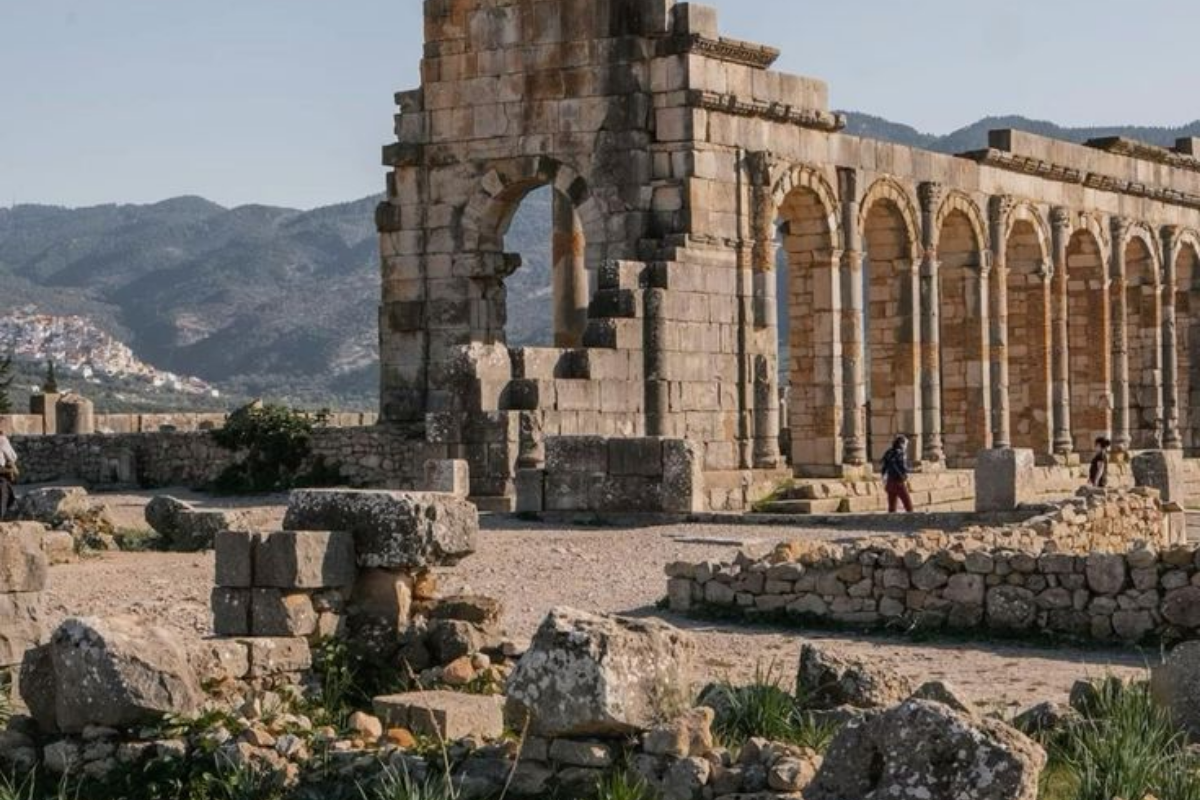
Tamegroute Morocco: Green Pottery & Ancient Library Guide
Tamegroute Morocco offers one of southern Morocco’s most distinctive cultural stops: a village where green-glazed pottery and a centuries-old scholarly tradition share the same setting. South of Zagora in the Drâa Valley, Tamegroute attracts curious travelers who want more than a photograph of sand dunes. Here, the important questions concern clay, fire, manuscripts, learning and the everyday work of a living community.
The village is often introduced through two highlights: pottery workshops and the library associated with the Nasiriyya religious and educational tradition. They are related by place, but each deserves its own attention. One is about the skill required to turn local materials into ceramics; the other is about the preservation and transmission of knowledge.
This Tamegroute Morocco guide explains what visitors can realistically expect, how to approach the library respectfully, what makes the green ceramics distinctive and how to combine a visit with a wider Drâa Valley journey. It also helps you avoid common travel mistakes, including assuming that every workshop is open or that every old manuscript can be viewed on demand.

Where Is Tamegroute Morocco?
Tamegroute sits in southeastern Morocco, in the Drâa Valley south of Zagora on the broader route toward M’Hamid El Ghizlane. The landscape here differs from the high mountains and medinas that many first-time visitors associate with Morocco. Settlements, cultivated areas, palm groves and stretches of dry ground occur along a valley that has long supported communities moving and working through southern Morocco.
For practical planning, Zagora is an obvious reference point. Visitors staying in the town can inquire about a short local excursion, while travelers continuing south toward the desert may include Tamegroute as a stop along the way. Actual drive times vary according to departure point, road conditions and the number of stops you make.
Tamegroute is a living village, not a single walled attraction. There is no reason to expect one ticket to cover every workshop, library space and street. Ask locally which visits are available, how long they take and whether a guide or a contribution is requested.
Why the Village Has a Distinct Cultural Identity
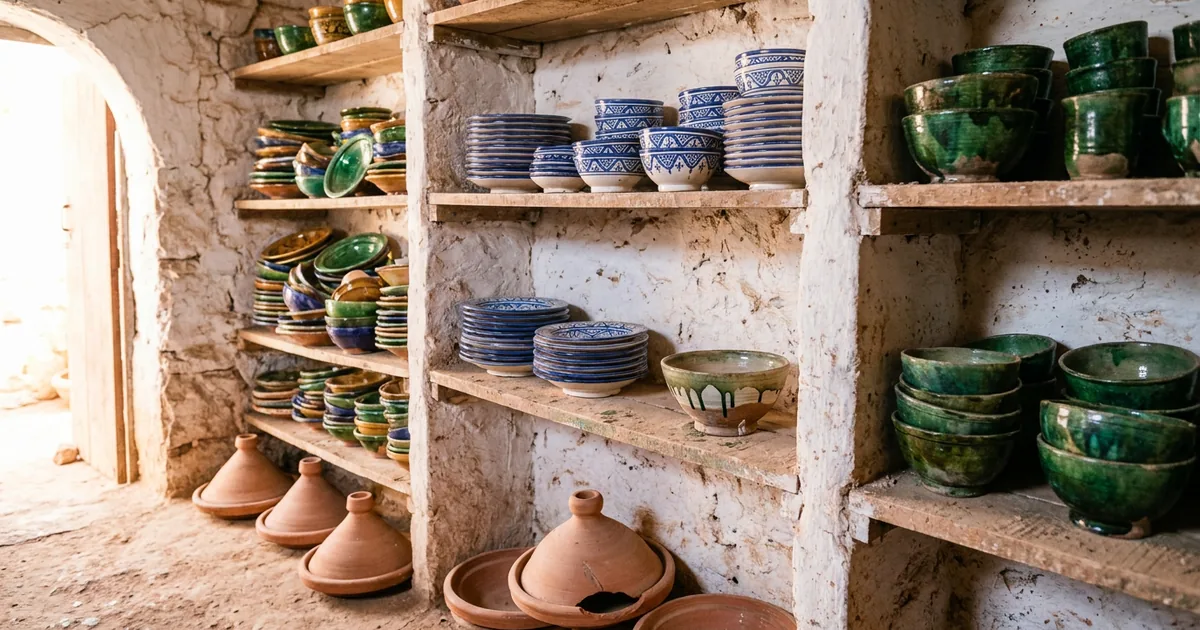
Two traditions give Tamegroute a memorable identity. Pottery brings together materials, firing methods and family knowledge, while the scholarly history of the Nasiriyya institution connects the village with learning and spiritual life. For visitors, these are not decorative details added to a desert tour. They are the reasons to come.
The green pottery is recognizable because of its rich color and frequently irregular surface. Each piece can carry variations in tone, glaze and finish caused by handmade production and firing conditions. The library, meanwhile, points to a different kind of heritage: written works, study and the care required to conserve fragile objects.
A good visit makes room for both, but there is no requirement to see everything. Travelers who enjoy craftsmanship may spend most of their time in a pottery area. Those interested in history may prefer a shorter workshop stop followed by careful explanation of the Nasiriyya tradition. Both are valid ways to appreciate the village.
Nine Amazing Things to Discover in Tamegroute Morocco
First, look closely at the green glaze rather than treating every bowl as identical. The depth of color and movement of the surface can change from piece to piece. Second, ask how a potter prepares clay before shaping an object, and notice the amount of repetitive work involved. Third, learn why drying matters: ceramics cannot simply move from wet clay to a finished dish without careful stages in between.
Fourth, ask about traditional kilns, while remembering that active firing areas may be hot, dusty or restricted. Fifth, compare practical objects such as bowls with decorative pieces, since their intended uses may differ. Sixth, explore the scholarly context of the Nasiriyya institution and the subjects represented in its manuscript tradition. Seventh, appreciate the village setting and the wider Drâa landscape from public viewpoints.
Eighth, speak with a willing artisan or guide about how craft skills are learned across generations. Ninth, connect Tamegroute with nearby Zagora and the southern desert routes without reducing the visit to a hurried shopping break. These nine experiences work best as a set of possibilities, not as guaranteed demonstrations or compulsory purchases.
How Tamegroute Green Pottery Is Made
Traditional ceramics begin with clay and the skill of preparing it for shaping. The precise practices may vary between workshops, but visitors can learn about gathering and processing material, forming the object, allowing it to dry, applying glaze and firing it in a kiln. Each stage can influence the finished piece.
The well-known green finish is associated with mineral-based glazes, including copper-bearing components described by local producers. Uneven heating and handmade preparation help explain why the color and texture are not mechanically uniform. That irregularity is part of the visual character many visitors value. It does not mean that every defect should be accepted automatically.
If you are visiting a working pottery area, follow the craftsperson’s instructions. Do not touch drying pieces, glaze materials or kilns, and keep children away from equipment. A demonstration may be unavailable when workers are busy or a kiln is being managed. A respectful visitor treats the workshop as a workplace first and a visitor experience second.
Buying Ceramics: Quality, Use and Fair Questions
Before buying pottery, decide whether the item is decorative, functional or a gift. Examine it for stability, visible chips and cracks. Ask the seller whether the piece is intended for serving food or only for display. Because traditional glazes and production methods vary, do not assume every vintage or handmade item is food-safe. For food-contact use, request credible testing information, particularly about lead and other glaze constituents; if that cannot be established, use the piece decoratively.
Prices vary with size, work and seller. There is no trustworthy single price list that applies to every workshop or every date. If a price is important to your decision, compare items politely and ask what is included. Packaging matters as well: ceramic edges and handles can break during travel, so request careful wrapping and check baggage rules.
Buying from a transparent local producer can make a purchase more meaningful. Ask about how the piece was made and whether the person selling it is connected to the workshop. Enjoy the conversation without pressuring artisans to reveal techniques they regard as part of their livelihood.
The Nasiriyya Library and Manuscript Heritage
Tamegroute is also associated with the Nasiriyya, sometimes written Naciri or Nasiriya, a religious and educational tradition known for its library. Manuscripts connected with this setting reflect a history of study, preservation and exchange of ideas. Descriptions of the collection mention subjects such as religious scholarship, law and scientific learning, though what a visitor can see at a particular moment may be limited.
Fragile manuscripts require protection from handling, excessive light and environmental change. Do not expect to turn pages, photograph every object or enter all areas of the complex. Access may be restricted for preservation, religious or operational reasons. Ask permission, follow posted instructions and accept a shorter visit if that is what is offered.
The point of visiting is not to claim that you have seen every famous manuscript. A careful introduction to the institution’s history, its role in the region and the challenges of conservation can be rewarding in its own right. A guide should distinguish evidence from exaggeration.
Visiting Religious and Scholarly Spaces Respectfully
The presence of a library within a religious heritage setting calls for particular care. Dress and behave modestly, speak quietly where appropriate and observe any restrictions concerning entry, photography and group size. Some areas may be intended for worship or community use rather than sightseeing. Visitors should not attempt to enter such spaces merely because a doorway is open.
If a caretaker or guide explains the history, listen carefully and ask focused questions. Do not handle displayed books, documents or architectural details. A polite request for permission is better than assuming filming is allowed. If access is unavailable on your chosen day, consider focusing on pottery and the wider village instead.
Historical scholarship deserves accuracy. When discussing dates, founders or individual books, rely on trustworthy interpretation. If a detail cannot be confirmed during your visit, it is better to leave the question open than to repeat an impressive but unsupported claim.
The Village Beyond Pottery and Manuscripts
Tamegroute is more than two recognizable tourist themes. Ordinary streets, homes, commerce and connections to the Drâa Valley show how heritage and contemporary life coexist. Look at the arrangement of buildings from public areas and consider how settlements relate to cultivated land and surrounding dry terrain.
A slow walk can be enjoyable, but village streets are not a free-access museum. Respect residential courtyards, ask before taking photographs of people and avoid blocking workers or vehicles. If a local person offers a guided walk, agree on the duration and any payment before beginning.
Travelers often want an “authentic” experience, but the most respectful approach is simply to recognize that residents have their own schedules and priorities. The village does not need to stage a performance to be interesting. The small details of a working community are often what make the stop memorable.
Best Time of Year to Visit
Spring and autumn generally offer more comfortable conditions for exploring the Drâa Valley than the hottest periods of summer. Midday temperatures can be demanding in the warmer months, while winter mornings and evenings may feel unexpectedly cool. Wind and dust can also shape the experience. Check current weather rather than planning from seasonal averages alone.
For photography, morning or later-afternoon light can be pleasant, but workshop and library access should determine the schedule. A beautiful sunset does not help if a cultural site is closed or staff have finished their day. Arrange visits in advance when possible.
Carry water, sun protection and comfortable shoes. If you intend to spend time observing pottery production, allow flexibility for the work being done that day. Seeing an artisan shaping clay is never a guarantee, and a quiet workshop visit can still offer useful insight into finished pieces.
Getting to Tamegroute from Zagora and Ouarzazate
Travelers commonly reach Tamegroute by road from Zagora, and some include it on longer journeys from Ouarzazate through Agdz and the Drâa Valley. Others stop while continuing toward M’Hamid and the desert beyond. The route is best planned with realistic time for transportation, breaks and cultural visits.
A private driver can simplify logistics, but independent travel may also be possible when current transport options match your schedule. Confirm connections locally, particularly the return journey. Avoid treating online travel-time estimates as guarantees, especially if you plan several stops or encounter changing conditions.
If you hope to enter a workshop or library, tell the driver or guide in advance. A roadside photo stop and a heritage-focused tour have very different time requirements. Ask whether the itinerary includes a specific craft area, a library explanation or merely a brief visit to the village.
A Thoughtful Half-Day Tamegroute Itinerary
Begin with an introduction to the village and the Drâa Valley setting. Then visit an available pottery workshop or sales space, watching from appropriate areas and asking about clay preparation, firing and glazing. Give yourself enough time to compare the handmade pieces and decide whether you want a souvenir.
Next, ask about current visitor access to the Nasiriyya library or related heritage interpretation. If available, follow the guide’s instructions and focus on the stories behind the manuscripts rather than expectations of unrestricted access. If not, use the time for another cultural explanation or a respectful short walk in public spaces.
Finish with a break before returning to Zagora or continuing south. A half-day framework works well, but actual timing depends on transport and opening arrangements. Do not book a packed schedule on the assumption that every activity will be available immediately.
Tamegroute Versus Zagora, M’Hamid and the Desert
Zagora offers accommodation, services and a practical base for the surrounding valley. M’Hamid is associated with the southern end of the paved route and journeys toward more remote dunes. Tamegroute’s main appeal is different: craft and scholarly heritage, experienced at a human scale.
A useful itinerary respects these differences. Choose Tamegroute when you want to learn about ceramics and the library. Choose a desert excursion when your priority is expansive landscapes and an overnight experience. Combine them only when you can allocate enough time and transport to make both worthwhile.
This distinction also keeps travel advice clear. A pottery stop is not a substitute for visiting the dunes, and a dune trip will not automatically include meaningful access to Tamegroute’s historical spaces. Ask operators exactly which stops are planned.
Responsible Tourism and Practical Advice
Help protect Tamegroute’s living traditions by treating workshops and heritage institutions with care. Do not touch hot equipment or unfinished ceramics. Ask before photographing artisans, especially while they work. Be transparent about whether you are shopping, learning or both.
Avoid inventing claims about a ceramic piece’s age or material composition. A recently made handmade bowl can be valuable because of its craftsmanship, not because it is “ancient.” For fragile or high-priced objects, request an honest description and suitable packaging. If you plan to use dishes for food, prioritize verified food-contact safety over appearance.
Carry cash where appropriate, but check prices before accepting services. Leave no litter, respect prayer and community routines and make room for genuine conversations. The best visit is often the one in which you learn a little more than you buy.
Frequently Asked Questions
What is Tamegroute Morocco famous for?
It is particularly known for its green-glazed pottery tradition and the Nasiriyya library and scholarly heritage.
Where is Tamegroute located?
Tamegroute is in the Drâa Valley of southeastern Morocco, south of Zagora on the route toward M’Hamid.
Can visitors enter the Nasiriyya library?
Visitor access can be limited and arrangements may change. Confirm locally and respect conservation and religious restrictions.
Why is Tamegroute pottery green?
Its characteristic glaze is associated with mineral ingredients, including copper-bearing materials, combined with traditional firing techniques.
Is Tamegroute pottery safe for food?
Do not assume so. Ask for credible food-contact testing and lead-safety information; otherwise consider the pottery decorative.
Can I watch potters at work?
Some working areas may welcome visitors, but demonstrations depend on the artisans’ schedules and safety requirements.
How much time do I need in Tamegroute?
A focused half-day can work well if workshop and library access align with your plans.
Can I combine Tamegroute with a desert tour?
Yes. It can fit into a Drâa Valley route toward M’Hamid when the itinerary leaves enough time for a real cultural visit.
Final Thoughts
Tamegroute Morocco rewards travelers who make room for cultural context and genuine local experiences. Plan with realistic expectations, confirm current access, and respect the people who live and work here. Morocco Travel Source encourages a thoughtful southern Morocco itinerary that values the story behind a place as much as its appearance.