Ultimate 11-Day Morocco Tour from Casablanca: Desert Adventures, Imperial Cities & Cultural Immersion
Embarking on an 11-day Morocco tour from Casablanca opens the door to one of the most captivating travel experiences in North Africa. This comprehensive Morocco itinerary takes you through a mesmerizing journey across golden deserts, ancient imperial cities, blue-washed mountain villages, and breathtaking coastal landscapes. From the cosmopolitan energy of Casablanca to the timeless sands of the Sahara Desert, every moment reveals Morocco’s extraordinary diversity and rich cultural heritage.
This carefully crafted 11-day Morocco itinerary has been designed in collaboration with Morocco Official Tours and Morocco Travel Source providers, ensuring an authentic, seamless, and unforgettable adventure. Whether you’re seeking Morocco Desert Tours, cultural immersion in UNESCO World Heritage sites, or luxury travel experiences, this itinerary offers the perfect balance of exploration, comfort, and genuine connection with Moroccan traditions. With expert guidance from a trusted Moroccan Travel Agency, your 11 days in Morocco will be nothing short of magical.
Why Choose an 11-Day Morocco Tour from Casablanca
Starting your Moroccan adventure in Casablanca provides unique advantages for international travelers. As Morocco’s largest city and main economic hub, Casablanca features Mohammed V International Airport, the country’s busiest gateway with direct flights from major cities across Europe, North America, the Middle East, and beyond. This accessibility makes Casablanca the ideal starting point for your 11-day Morocco tour.
Moreover, an 11-day Morocco itinerary offers the perfect duration to explore the country’s iconic destinations without feeling rushed. You’ll have time to truly immerse yourself in each location, from wandering through ancient medinas to sleeping under desert stars, and from savoring traditional cuisine to connecting with local Berber communities. This extended timeframe allows for deeper cultural experiences and meaningful encounters that shorter trips simply cannot provide.
Furthermore, Casablanca itself represents the modern face of Morocco—a fascinating blend of contemporary architecture, colonial heritage, and traditional Moroccan culture. Beginning your journey here allows you to witness Morocco’s evolution from a historic kingdom to a dynamic 21st-century nation. With Morocco Official Tours coordinating every detail, travelers can focus entirely on experiencing Morocco’s magic while leaving logistics, accommodations, and transportation to experienced professionals.
The 11-day format also provides flexibility for customization. Whether you prefer luxury riads and five-star hotels, authentic guesthouses in Berber villages, or a combination of both, Morocco Trip Packages can be tailored to match your travel style and budget. From Desert Tours from Casablanca to cultural explorations in imperial cities, every element can be adjusted to create your perfect Moroccan adventure.

Day 1: Casablanca – Where Your Moroccan Journey Begins
Your 11-day Morocco tour from Casablanca begins with arrival at Mohammed V International Airport, where your Moroccan Travel Agency representative will greet you with warm hospitality. After a smooth transfer to your hotel or riad, you’ll have time to settle in and prepare for the adventures ahead. Depending on your arrival time, you can begin exploring this fascinating city immediately or rest and start fresh the following morning.
Casablanca, known locally as “Dar el-Beida” (The White House), is Morocco’s economic powerhouse and most populous city. Unlike the ancient imperial cities, Casablanca showcases Morocco’s modern aspirations while preserving its cultural roots. The city’s Art Deco architecture, wide boulevards, and bustling port create a unique atmosphere that differs dramatically from what you’ll encounter in traditional Moroccan cities.
Exploring the Hassan II Mosque and Coastal Beauty
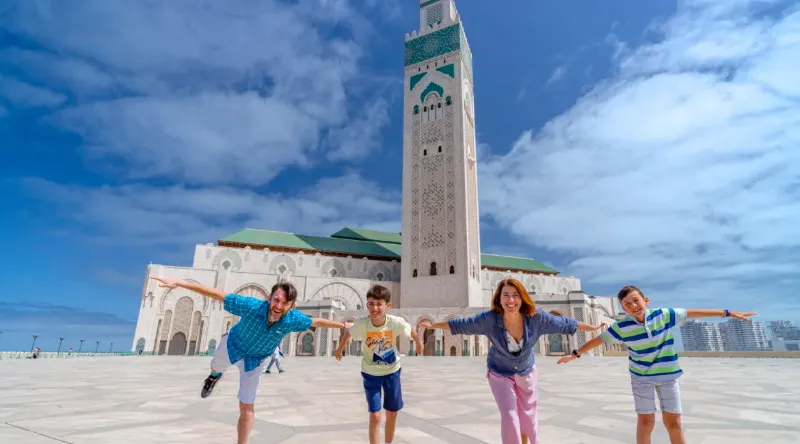
Your first full day centers around Casablanca’s crown jewel: the magnificent Hassan II Mosque. This architectural masterpiece ranks among the largest mosques in the world, with its towering 210-meter minaret dominating the city skyline. Completed in 1993, the mosque sits partially over the Atlantic Ocean, creating a stunning visual effect as waves crash against its foundations.
The Hassan II Mosque is one of the few mosques in Morocco that welcomes non-Muslim visitors, making it an essential stop on any Casablanca Desert Tours or Morocco Trip Packages. Inside, you’ll marvel at intricate zellige tilework, carved cedar wood ceilings, massive crystal chandeliers, and a retractable roof that opens to the heavens. The craftsmanship represents the pinnacle of Moroccan artisanship, with thousands of skilled workers contributing to its creation.
After visiting the mosque, take a leisurely stroll along the Corniche, Casablanca’s scenic coastal promenade. Lined with restaurants, cafes, beach clubs, and luxury hotels, the Corniche offers spectacular Atlantic views and a glimpse into Casablanca’s leisure culture. Stop for fresh seafood at one of the oceanfront restaurants or enjoy a refreshing mint tea while watching the sunset over the water.
Discovering Old and New Casablanca
The Old Medina of Casablanca, though smaller than those in Fez or Marrakech, offers an authentic glimpse into traditional Moroccan life. Wander through narrow alleyways filled with local vendors selling spices, textiles, pottery, and traditional crafts. The medina’s whitewashed walls and blue accents reflect the city’s maritime character, creating a charming contrast to the modern city beyond its walls.
In the afternoon, explore the Quartier Habous, also known as the New Medina. Built by French colonial authorities in the 1930s, this neighborhood beautifully blends Moroccan architectural traditions with French urban planning. Here you’ll find artisan workshops, bakeries selling traditional pastries, and shops offering high-quality Moroccan handicrafts. The Royal Palace sits nearby, its ornate gates providing excellent photo opportunities.
For those interested in contemporary culture, visit the Morocco Mall, Africa’s second-largest shopping center, or explore the vibrant nightlife scene in the Maârif and Gauthier districts. Casablanca’s cosmopolitan energy and diverse entertainment options make it clear why this city serves as Morocco’s cultural melting pot.
As evening approaches, consider dining at Rick’s Café, a restaurant and bar recreated to evoke the atmosphere of the classic film “Casablanca.” While touristy, it offers good food, live music, and a nostalgic ambiance that connects cinema history with your real Moroccan adventure. This first day sets the tone for your 11-day Morocco tour from Casablanca, blending modern comfort with cultural discovery.

Day 2: Casablanca to Rabat to Chefchaouen – Journey to the Blue Pearl
After breakfast, your 11-day Morocco itinerary continues northward toward Chefchaouen, with a fascinating stop in Rabat, Morocco’s elegant capital city. This day offers a perfect transition from Casablanca’s cosmopolitan energy to the serene beauty of Morocco’s mountain regions, with Rabat serving as a cultural bridge between past and present.
Rabat: Morocco’s Political and Cultural Capital
Rabat, designated as a UNESCO World Heritage Site, represents Morocco’s political heart while maintaining an atmosphere of refined elegance. The city’s wide avenues, manicured gardens, and well-preserved historical sites create a more relaxed pace compared to the bustling energy of Casablanca or Marrakech.
Begin your Rabat exploration at the iconic Hassan Tower, an incomplete minaret that stands as a testament to an ambitious 12th-century mosque project. Adjacent to the tower lies the stunning Mausoleum of Mohammed V, where Morocco’s former kings rest in magnificent marble splendor. The intricate craftsmanship, colorful zellige tiles, and solemn atmosphere make this one of Morocco’s most important national monuments.
Next, visit the Kasbah of the Udayas, a fortified citadel overlooking the Atlantic Ocean and the Bou Regreg River. This peaceful neighborhood features blue and white painted houses, narrow streets, beautiful gardens, and spectacular views. The Andalusian Gardens within the kasbah offer a tranquil escape, with fragrant flowers, palm trees, and fountains creating a paradise-like setting.
The Journey Through the Rif Mountains
After exploring Rabat, continue your journey northward through Morocco’s diverse landscapes. The drive to Chefchaouen takes you through the Rif Mountains, a stunning range characterized by rolling hills, olive groves, cannabis fields (legal for local use), and traditional Berber villages clinging to mountainsides.
As you ascend into the mountains, the scenery transforms dramatically. Lush valleys give way to rocky peaks, and the air becomes noticeably cooler and fresher. Along the way, you’ll pass through small towns and villages where life continues much as it has for centuries. Your driver may stop at scenic viewpoints, allowing you to photograph the breathtaking landscape and stretch your legs.
Arrival in Chefchaouen: The Blue Pearl
As afternoon transitions to evening, you’ll arrive in Chefchaouen, one of Morocco’s most photographed and beloved destinations. Nestled in the Rif Mountains, Chefchaouen is famous for its stunning blue-washed buildings, creating an otherworldly atmosphere that feels like stepping into a dream.
Founded in 1471 as a fortress to defend against Portuguese invasions, Chefchaouen later became a haven for Muslim and Jewish refugees fleeing the Spanish Reconquista. This history of sanctuary and tolerance continues to define the city’s welcoming character. The tradition of painting buildings blue has various explanations: some say it represents heaven and spirituality, others claim it repels mosquitoes, while some believe Jewish refugees brought the custom from their communities.
After checking into your riad or hotel, take an evening stroll through the medina. As sunset bathes the blue walls in golden light, photographers and artists find endless inspiration in every corner. The relaxed pace, friendly locals, and magical ambiance make Chefchaouen a highlight of any 11-day Morocco tour from Casablanca. Enjoy dinner at a rooftop restaurant, savoring traditional Moroccan dishes while overlooking the illuminated medina below.
Day 3: Chefchaouen – Immersion in the Blue City
Your third day is dedicated entirely to exploring Chefchaouen, allowing you to experience this enchanting mountain town at a leisurely pace. Unlike larger Moroccan cities, Chefchaouen’s compact size and peaceful atmosphere create perfect conditions for wandering without a strict itinerary, getting beautifully lost in its blue-painted labyrinth.
Exploring the Blue-Washed Medina
Begin your day early, when soft morning light illuminates the blue walls and creates perfect conditions for photography. The medina’s narrow streets, vibrant doorways, and colorful potted plants create countless Instagram-worthy scenes. Every corner reveals new shades of blue—from deep indigo to pale sky blue—creating a visual symphony that captivates visitors.
The main square, Plaza Uta el-Hammam, serves as the medina’s heart. Surrounded by cafes and restaurants, this lively plaza features the distinctive red-walled Kasbah Museum and the Grand Mosque with its unique octagonal minaret. Sit at a café, order fresh orange juice or mint tea, and watch local life unfold around you. Elderly men gather to play chess, women carry shopping baskets, and cats lounge in sunny spots.
Visit the Kasbah Museum, a 15th-century fortress converted into a museum and art gallery. The kasbah’s Andalusian gardens provide a peaceful retreat with fountains, exotic plants, and shaded benches. Climb to the tower’s top for panoramic views over the blue medina’s rooftops, with the Rif Mountains creating a dramatic backdrop.
Artisan Crafts and Local Markets
Chefchaouen’s souks offer excellent opportunities to purchase authentic Moroccan crafts. The city is particularly known for its wool garments, handwoven blankets, and distinctive textiles featuring traditional Berber patterns. Unlike more aggressive markets in larger cities, Chefchaouen’s vendors are generally relaxed and friendly, making shopping a pleasant experience.
Browse shops selling leather goods, pottery, jewelry, natural cosmetics like argan oil, and locally produced goat cheese. Many artisans work in open workshops, allowing you to watch craftspeople practicing centuries-old techniques. The medina also features numerous galleries showcasing local artists’ work, from traditional paintings to contemporary interpretations of Moroccan themes.
Hiking and Natural Beauty
For active travelers, Chefchaouen offers excellent hiking opportunities. The Spanish Mosque, located on a hillside east of the medina, provides stunning sunset views over the blue city and surrounding mountains. The 30-40 minute hike is moderately easy and extremely rewarding, especially as golden hour light bathes the blue buildings below.
More adventurous visitors can arrange longer hikes with local guides to explore the Rif Mountains’ natural beauty. The nearby Akchour waterfalls, located about 30 kilometers from Chefchaouen, offer spectacular cascades, natural pools, and the famous “Bridge of God” (Pont de Dieu), a natural rock arch spanning a deep gorge. These excursions can be arranged through your Moroccan Travel Agency or Morocco Official Tours.
Evening Relaxation and Moroccan Cuisine
As evening approaches, find a rooftop restaurant for dinner with panoramic medina views. Chefchaouen’s culinary scene offers excellent traditional dishes, often prepared with fresh mountain ingredients. Try tagines cooked with local vegetables, harira soup, grilled meats, or the regional specialty of goat cheese. The cooler mountain climate makes hearty meals especially satisfying.
After dinner, the medina takes on a different character as shops close and locals emerge for evening walks. The quieter streets, illuminated by soft lamplight, create an almost mystical atmosphere. This peaceful conclusion to your day in Chefchaouen provides a perfect contrast to the busier cities you’ll visit later in your 11-day Morocco itinerary.
Day 4: Chefchaouen to Volubilis to Meknes to Fez – Journey to the Imperial City
Your fourth day involves traveling from the serene blue mountains to Fez, Morocco’s spiritual and intellectual capital. This journey includes fascinating stops at Roman ruins and imperial monuments, creating a comprehensive historical narrative spanning millennia. The drive covers approximately 200 kilometers, with several hours dedicated to exploring sites along the way.
Volubilis: Morocco’s Roman Legacy
Your first stop is Volubilis, Morocco’s best-preserved Roman ruins and a UNESCO World Heritage Site. Located near the town of Moulay Idriss, these extensive ruins date back to the 3rd century BCE, when this area served as the Roman Empire’s southwestern frontier. Volubilis reached its peak as a prosperous olive oil production center, housing around 20,000 inhabitants.
Walking through Volubilis feels like stepping back two millennia. Remarkably intact floor mosaics display intricate geometric patterns and mythological scenes, their colors still vibrant after centuries. The House of Orpheus, House of Venus, and House of Dionysus contain some of the finest mosaics, depicting Roman gods, daily life scenes, and complex designs that showcase ancient artistic sophistication.
The site’s layout reveals a typical Roman city with a forum, basilica, triumphal arch, temples, public baths, and residential quarters. The Arch of Caracalla, erected in 217 CE, still stands proudly, framing views of the surrounding countryside. Standing columns, fallen capitals, and reconstructed walls help visualize this once-thriving city. Your guide from Morocco Travel Source will bring history alive, explaining daily life in Roman Africa and the empire’s influence on Moroccan culture.
Meknes: The Forgotten Imperial City
After Volubilis, continue to Meknes, one of Morocco’s four imperial cities and another UNESCO World Heritage Site. While often overshadowed by its more famous neighbors, Meknes deserves recognition for its magnificent monuments and historical significance. Sultan Moulay Ismail transformed Meknes into Morocco’s capital in the 17th century, creating a city of grand proportions.
Begin at the massive Bab Mansour gate, considered Morocco’s most beautiful monumental entrance. Its intricate tile work, carved stone decorations, and imposing size demonstrate the sultan’s ambition and power. Nearly every Morocco Trip Package includes a photo stop here, as the gate exemplifies Moroccan architectural grandeur.
Visit the Mausoleum of Moulay Ismail, one of the few religious sites in Morocco where non-Muslims may enter. The serene courtyard, elaborate decorations, and respectful atmosphere provide insight into Moroccan religious architecture and royal reverence. The adjacent Heri es-Souani granaries and stables once stored food and housed thousands of horses, demonstrating the sultan’s organizational capacity and military strength.
Stroll through Meknes’ medina, less chaotic than Fez but equally authentic. The Place el-Hedim square serves as the medina’s entrance, surrounded by cafes and shops. Browse the souks for local crafts, particularly Meknes’ famous damascene (metal inlay work). If time permits, visit the Museum of Moroccan Art in Dar Jamai, a beautiful 19th-century palace showcasing traditional crafts, jewelry, and textiles.
Arrival in Fez: Morocco’s Oldest Imperial City
As afternoon transitions to evening, arrive in Fez, where you’ll spend the next two nights. Founded in the 9th century, Fez serves as Morocco’s spiritual, educational, and cultural heart. The city’s medieval medina, Fez el-Bali, is the world’s largest car-free urban zone and a UNESCO World Heritage Site.
Your Moroccan Travel Agency will arrange accommodation in a traditional riad within or near the medina. These restored historic homes feature interior courtyards, intricate tilework, carved cedar ceilings, and intimate atmospheres that transport guests centuries into the past. After settling in, enjoy a welcome dinner featuring classic Fassi cuisine, including savory pastilla (phyllo pastry with pigeon or chicken and almonds), aromatic tagines, and sweet pastries with mint tea.
Rest well tonight, as tomorrow you’ll dive deep into Fez’s labyrinthine medina, discovering why this ancient city captivates travelers and scholars alike. This day perfectly demonstrates why an 11-day Morocco tour from Casablanca provides time for meaningful cultural immersion rather than rushed sightseeing.
Day 5: Fez – Exploring Morocco’s Cultural Capital
Your fifth day is dedicated entirely to exploring Fez, allowing deep immersion in Morocco’s most traditional city. Unlike Marrakech’s tourist-oriented atmosphere or Casablanca’s modern energy, Fez maintains an authentic medieval character where daily life continues much as it has for centuries. This full-day exploration reveals why Fez remains central to Moroccan identity and why it features prominently in all Morocco Travel Source.
The Labyrinth of Fez el-Bali Medina
Begin your day early with a knowledgeable local guide who will navigate you through Fez el-Bali’s maze of over 9,000 narrow streets and alleyways. Without a guide, even experienced travelers become hopelessly lost in this medieval labyrinth. The medina contains approximately 30,000 buildings and houses nearly 150,000 residents, creating a living museum of medieval Islamic urban design.
Enter through the iconic Bab Bou Jeloud (Blue Gate), the medina’s most photographed entrance. Its blue ceramic exterior (facing the medina) and green interior (facing the new city) represent the colors of Islam and Fez respectively. Beyond the gate, you’re immediately transported to another era—no cars, only donkeys and handcarts transporting goods through narrow passages barely wide enough for two people to pass.
Discovering Ancient Monuments and Artisan Workshops
Your guided tour includes several essential landmarks. The Al-Qarawiyyin Mosque and University, founded in 859 CE by Fatima al-Fihri, is recognized by UNESCO and Guinness World Records as the world’s oldest continuously operating educational institution. While non-Muslims cannot enter the mosque, you can admire its magnificent architecture from several vantage points and visit the adjacent library, which houses rare manuscripts and ancient texts.
The Bou Inania Madrasa, built in 1355, represents the pinnacle of Marinid architecture. This Islamic school welcomes visitors of all faiths, allowing you to appreciate its stunning courtyard with intricate zellige tilework, carved cedar wood, elaborately decorated plasterwork, and geometric designs that showcase mathematical precision. Sunlight filtering through carved screens creates mesmerizing patterns, perfect for contemplative photography.
Visit the Nejjarine Museum of Wooden Arts and Crafts, housed in a beautifully restored funduq (caravanserai). The museum displays traditional woodworking tools and finished pieces, explaining cedar wood’s importance in Moroccan craftsmanship. The building itself, with its ornate fountain and decorative elements, exemplifies Moroccan architectural beauty.
The Chouara Tannery: A Sensory Experience
No visit to Fez is complete without witnessing the Chouara Tannery, one of the city’s most iconic and photogenic sites. The tannery has operated continuously for centuries using traditional methods passed through generations. From surrounding leather shops’ terraces, you’ll look down on dozens of circular stone vessels filled with dyes and natural tanning solutions in vibrant reds, yellows, browns, and blacks.
Workers stand waist-deep in the vats, treating animal hides using techniques unchanged since medieval times. The process involves pigeon droppings, cow urine, quicklime, salt, and water to soften and clean the leather before dyeing with natural pigments from saffron, indigo, poppy, and henna. Shop owners provide mint sprigs to counter the strong ammonia smell—though pungent, the scent is manageable and part of the authentic experience.
The tannery scene appears almost surreal with its vivid colors, ancient methods, and workers’ rhythmic movements. Photography from the terraces captures one of Morocco’s most distinctive images. Afterward, browse the leather goods shops, where you can purchase jackets, bags, shoes, and poufs made from the tannery’s leather. Remember that prices are negotiable, and friendly bargaining is expected.
Artisan Quarters and Traditional Crafts
Fez remains Morocco’s artisan capital, with craftspeople practicing trades handed down through generations. Your guide will lead you through various souks (specialized market areas), each dedicated to specific crafts: metalworkers, ceramicists, carpet weavers, spice sellers, and silk weavers.
Watch artisans creating intricate zellige tilework by hand-cutting colored ceramic pieces into geometric shapes, then assembling them into complex patterns without drawings or templates—all from memory and experience. Observe carpet weavers working traditional looms, creating Berber rugs with symbolic patterns that tell stories. Visit a cooperative where you can see women weaving silk, and perhaps try your hand at the craft.
The spice souks assault your senses with vibrant colors and powerful aromas. Pyramids of cumin, saffron, paprika, ras el hanout (Moroccan spice blend), preserved lemons, and olives create a photographer’s dream. Knowledgeable spice merchants explain each ingredient’s culinary and medicinal uses, often offering samples of herbal teas or spice blends.
Evening Relaxation and Fassi Cuisine
After a full day exploring, return to your riad for rest and refreshment. Many riads offer rooftop terraces where you can relax with mint tea while watching the sun set over the medina’s rooftops. The call to prayer echoing from numerous mosques creates an atmospheric soundtrack to your relaxation.
For dinner, experience authentic Fassi cuisine at a traditional restaurant or within your riad. Fez’s culinary traditions differ from other Moroccan regions, with dishes like tagine with prunes and almonds, rfissa (shredded bread with chicken and lentils), and the famous pastilla. Many Morocco Desert Tours and Morocco Trip Packages include a Fassi cooking demonstration or class, allowing you to learn these recipes and recreate Moroccan flavors at home.
As night falls, the medina transforms. While main thoroughfares remain active, side streets quiet down, creating an almost mystical atmosphere. A brief evening walk (with your guide or riad staff) reveals Fez’s nocturnal character—a city where tradition and spirituality remain paramount, even as modernity gradually influences daily life.
Day 6: Fez to Ifrane to Midelt to Merzouga – Journey to the Sahara Desert
Day six marks one of your 11-day Morocco tour from Casablanca’s most dramatic transitions: leaving the medieval atmosphere of Fez and traveling south through diverse landscapes toward the legendary Sahara Desert. This long but fascinating drive covers approximately 470 kilometers, with spectacular scenery changes and interesting stops along the way. Your Desert Tours from Fes begin in earnest today.
Through the Middle Atlas Mountains
Departing Fez, your journey takes you south into the Middle Atlas Mountains, a region of cedar forests, rolling hills, and cooler temperatures. The landscape quickly transforms from the urban density of Fez to open countryside with Berber villages, agricultural lands, and shepherds tending flocks.
Your first significant stop is Ifrane, often called “Morocco’s Switzerland” or “Little Switzerland” due to its European alpine architecture, clean streets, manicured parks, and cooler climate. Built by French colonizers in the 1930s as a summer retreat, Ifrane features stone houses with red-tiled roofs, creating an atmosphere strikingly different from typical Moroccan cities. Al Akhawayn University, Morocco’s most prestigious English-language institution, is located here, giving the town a youthful, educated atmosphere.
Stop for coffee or a brief walk around the town center, where you’ll find the famous stone lion statue, a popular photo opportunity. The contrast between Ifrane’s European aesthetic and Morocco’s traditional architecture highlights the country’s diverse cultural influences.
Cedar Forests and Barbary Macaques
Continuing south, enter the stunning cedar forests near Azrou. These ancient forests contain Morocco’s largest concentration of Atlas cedars, some hundreds of years old. The area is home to endangered Barbary macaques (Barbary apes), North Africa’s only native primate species.
Your driver will stop where macaque troops frequently gather near the roadside. These intelligent, curious animals often approach vehicles, looking for food offerings. While feeding them is common, do so carefully and maintain respectful distance—they’re wild animals, not pets. Photographing these unique primates in their natural forest habitat creates memorable moments and contributes to understanding their endangered status.
The cedar forests also offer opportunities for short walks among towering trees, breathing in fresh mountain air and experiencing Morocco’s natural biodiversity. The forests’ tranquility contrasts sharply with urban medinas, reminding travelers of Morocco’s geographic and ecological variety.
Midelt and the Ziz Valley
Continue through Midelt, a small town situated between the Middle and High Atlas mountain ranges, often called “the apple capital” due to its orchards. Stop here for lunch, enjoying traditional Moroccan cuisine or the town’s specialty: grilled kebabs with fresh bread and salads. Midelt serves as an important crossroads for travelers heading between northern Morocco and the Sahara.
After Midelt, the landscape becomes increasingly dramatic as you descend into the Ziz Valley. This spectacular gorge, carved by the Ziz River over millennia, features towering rock walls, palm groves, and fortified kasbahs clinging to hillsides. The valley’s oasis vegetation creates a ribbon of green cutting through otherwise barren mountains—a testament to water’s life-giving power in arid regions.
Stop at panoramic viewpoints overlooking the Ziz Valley, where photographers capture stunning vistas of the meandering river, date palm plantations, and ancient earthen villages. The Hassan Addakhil Dam, built in 1971, creates a large reservoir that appears suddenly in this dry landscape. These stops allow you to stretch, take photos, and appreciate the journey’s scenic beauty.
Arrival in Merzouga and the Erg Chebbi Dunes
As afternoon progresses toward evening, you’ll arrive in Merzouga, a small desert village on the edge of Erg Chebbi, Morocco’s most impressive dune field. The first sight of Erg Chebbi’s massive orange dunes rising from the flat desert floor is breathtaking—these are the Sahara dunes that grace Morocco travel brochures and inspire travelers worldwide.
Merzouga serves as the jumping-off point for Morocco Desert Tours into the deep Sahara. After a brief refreshment at your hotel, prepare for your camel trek into the dunes. As the sun begins its descent, you’ll mount your camel and set off in a caravan, swaying gently with your camel’s rhythmic gait. The silence of the desert, broken only by camel footsteps in sand and occasional wind, creates a meditative atmosphere.
Sunset and Overnight in a Desert Camp
The camel trek typically lasts 1-2 hours, timed to reach your desert camp as the sun sets over the dunes. Watching the Sahara sunset is truly magical—the sky transforms through brilliant oranges, reds, purples, and golds, while the dunes shift through deepening shades of amber and copper. Photographers find endless inspiration in these moments, capturing one of nature’s most spectacular daily performances.
Arrive at your desert camp as darkness falls and stars begin emerging. These camps range from basic Berber tents to luxury desert accommodations with comfortable beds, private bathrooms, and even air conditioning, depending on your Morocco Trip Package. Most Desert Tours from Casablanca offer mid-range camps with traditional Berber tents, communal dining areas, and basic but clean facilities.
After settling in, enjoy a traditional Berber dinner—tagines, salads, fresh bread, and fruit—served communally under the stars. Following dinner, gather around the campfire as Berber guides play traditional drums and sing desert songs. The music, combined with the fire’s warmth and the Milky Way’s stunning clarity overhead, creates an unforgettable atmosphere that captures Morocco’s nomadic heritage.
Before sleeping, take time to stargaze. The Sahara’s lack of light pollution reveals thousands of stars invisible in urban areas. The Milky Way stretches across the sky in a luminous band, and shooting stars streak regularly. This profound connection with nature and the cosmos reminds us of Earth’s beauty and our small place within it. Fall asleep to complete silence—a rare gift in our noisy modern world.
Day 7: Merzouga Sahara Desert Experience – Full Day in the Dunes
Your seventh day offers a full immersion in the Sahara Desert experience, widely considered the highlight of any 11-day Morocco tour from Casablanca. While many travelers only spend one night in the desert, your extended itinerary allows for deeper exploration and appreciation of this extraordinary environment. Today you’ll witness the desert sunrise, explore the dunes and surrounding area, and experience authentic Berber hospitality.
Sahara Sunrise: A Spiritual Beginning
Wake before dawn—your guide will rouse the camp early—and climb to a dune’s summit to watch the sunrise. The pre-dawn desert is remarkably cold, so bring warm layers. As the first light touches the horizon, the sky transforms through subtle blues and purples before erupting in brilliant golds and oranges. The dunes shift from dark silhouettes to glowing amber waves as sunlight gradually illuminates their ridges and valleys.
The sunrise over Erg Chebbi is considered one of the world’s most beautiful natural phenomena. The play of light and shadow creates constantly changing patterns across the dunes, while the crisp morning air and profound silence enhance the experience’s spiritual quality. Many travelers describe this moment as transformative—a reminder of nature’s grandeur and timeless beauty. Take time to simply be present, breathing deeply, and absorbing this magical scene.
After sunrise, return to camp for a traditional Berber breakfast—fresh bread, olive oil, honey, jam, cheese, and mint tea. The morning remains cool, making it the perfect time for activities before the day’s heat builds.
Desert Activities and Exploration
Your full day in the Sahara offers multiple activity options, usually included in Morocco Travel Source and Morocco Desert Tours packages. Popular activities include:
4×4 Desert Excursions: Explore areas impossible to reach on foot or camel. Visit the seasonal lake of Merzouga (if water is present), where pink flamingos and other migratory birds gather. Drive to nomadic Berber families living in traditional tents, gaining insight into their pastoral lifestyle. Visit small desert villages where black-skinned Moroccans—descendants of sub-Saharan traders and the historical trans-Saharan slave trade—preserve unique musical traditions, particularly Gnawa music.
Sandboarding: Like snowboarding but on sand dunes! Climb to a dune’s peak and slide down on a sandboard—thrilling, exhausting, and incredibly fun. Most desert camps provide sandboards free or for minimal cost. Multiple runs mean lots of climbing, but the rush of sliding down steep dune faces makes it worthwhile.
Quad Biking or Dune Buggy Rides: For adrenaline seekers, motorized desert exploration offers excitement and access to remote dunes. These activities typically cost extra but provide unforgettable experiences racing across the Sahara’s golden expanse.
Desert Walking and Photography: Simply walking the dunes offers profound rewards. Observe how wind creates ripple patterns in sand, discover desert beetle tracks, watch how light changes throughout the day, and appreciate the dunes’ sculptural beauty. Photographers find endless compositions in the curves, shadows, textures, and colors.
Berber Culture and Traditional Life
Part of your day includes cultural experiences with local Berber (Amazigh) people. Visit a traditional Berber family in their home, sharing tea and conversation. Learn about their history as indigenous North Africans, their nomadic pastoral traditions, their unique language (Tamazight), and how modern life is changing ancient customs.
Many Morocco Trip Packages include a visit to a Berber weaving workshop, where women demonstrate traditional carpet-making techniques. These geometric-patterned rugs tell stories through symbols representing fertility, protection, nature, and daily life. Understanding these symbols adds depth to appreciating Berber art’s sophistication.
If music interests you, experience Gnawa musicians performing traditional songs. Gnawa music, with its hypnotic rhythms, spiritual lyrics, and distinctive three-stringed guembri (bass lute), represents Morocco’s African connections. The music’s trance-inducing qualities historically served spiritual healing purposes and remain culturally significant.
Afternoon Relaxation and Reflection
As midday temperatures peak, return to camp or a nearby auberge (desert hotel) for lunch and relaxation during the hottest hours. Many desert accommodations feature shaded terraces or pools where you can cool off while contemplating the dunes.
Use this quiet time for reflection and journaling. The desert’s profound silence and vast emptiness create space for introspection impossible in busy daily life. Many travelers report that their Sahara experience becomes their Morocco trip’s most memorable and meaningful element—not just for the spectacular scenery, but for the mental clarity and peace it provides.
Second Sunset and Evening Under the Stars
As late afternoon arrives, prepare for your second desert sunset. Each Sahara sunset differs based on weather, dust, and atmospheric conditions, making every evening unique. Climb a high dune, find a comfortable spot in the sand, and watch the sun descend toward the horizon. The temperature drops rapidly once the sun sets, transforming the desert from furnace to refrigerator within an hour.
Enjoy another traditional dinner at camp, followed by more music and storytelling around the fire. The Berber guides often share legends about the desert, tales of ancient caravans, stories of jinns (spirits) said to inhabit remote dunes, and wisdom passed through generations. These cultural exchanges enrich your understanding of Morocco’s desert peoples and their profound connection to this harsh yet beautiful landscape.
Tonight’s sleep under the stars feels more comfortable than the first night—you’ve adapted to the desert’s rhythm and unusual sleeping environment. Fall asleep to the gentle sound of wind shifting sand grains, secure in having experienced one of Earth’s most remarkable landscapes.
Day 8: Merzouga to Todra Gorge to Dades Valley – Dramatic Landscapes
After a final sunrise over the dunes and breakfast at camp, bid farewell to the Sahara and begin your journey westward through more of Morocco’s spectacular southern landscapes. Today’s route takes you through dramatic gorges, ancient kasbahs, and the stunning Dades Valley, often called the “Valley of a Thousand Kasbahs.” This approximately 260-kilometer journey offers continuous visual feast of geological wonders and human adaptation to harsh environments.
Return to Merzouga and Journey West
After camel trekking back to Merzouga village, meet your driver and depart westward along the “Road of a Thousand Kasbahs.” This route connects the desert with the Atlas Mountains, passing through regions where earthen fortresses (kasbahs) and fortified villages (ksour) reflect centuries of Berber architecture adapted to desert conditions.
The morning drive takes you through increasingly dramatic landscapes. The flat desert gives way to rocky plains, then foothills, and eventually towering canyon walls. Stop in Erfoud, a town famous for fossil workshops where ancient marine fossils—trilobites, ammonites, orthoceras—are extracted from local stone and crafted into decorative items. These fossils prove that this desert region once lay beneath a vast prehistoric ocean, adding geological wonder to cultural interest TripAdvisor Morocco Forums and Reviews.
Todra Gorge: Morocco’s Most Spectacular Canyon
Around midday, arrive at Todra Gorge, one of Morocco’s most breathtaking natural wonders. The Todra River has carved this narrow canyon through limestone mountains, creating vertical walls rising 300 meters (nearly 1,000 feet) high in places. The gorge’s narrowest section is only 10 meters wide, creating a dramatic corridor where walls seem to close overhead.
Walk into the gorge along the river, feeling the temperature drop as you enter the shade. The scale is awe-inspiring—towering rock walls displaying bands of sedimentary layers accumulated over millions of years. The gorge’s unique acoustics amplify every sound, from water flowing over rocks to birds singing in palm trees.
Todra Gorge is popular with rock climbers, and you might see them scaling the vertical limestone faces. The area offers numerous climbing routes ranging from beginner to expert levels. For non-climbers, simply walking through the gorge, touching ancient rock walls, and photographing light and shadow playing across stone provides plenty of excitement.
Stop at one of the gorge’s simple cafes for lunch—tagines, omelets, or salads accompanied by fresh bread and mint tea. These family-run establishments offer basic but hearty food and spectacular terrace views of the canyon walls. After lunch, explore further into the gorge or browse shops selling local crafts, fossils, and minerals.
Journey Through the Dades Valley
Leaving Todra Gorge in the afternoon, continue toward the Dades Valley through landscapes that continuously astonish. The route takes you through numerous traditional Berber villages built from the same red-brown earth they sit upon, creating an organic unity between architecture and environment. These villages have housed Berber families for centuries, with some kasbahs dating back hundreds of years.
The Dades Valley follows the Dades River, creating a ribbon of green palm groves, almond orchards, and cultivated fields between barren rocky mountains. This fertile valley demonstrates traditional irrigation techniques (seguias) that channel snowmelt and river water to agricultural terraces. In spring, almond and rose blossoms transform the valley into a spectacular pink and white paradise.
Stop at various viewpoints along the valley, including the famous “Monkey Fingers” rock formations—bizarre geological formations resembling fingers pointing skyward. These limestone pillars, eroded over millennia by wind and water, create surreal landscapes photographers adore. Your driver will know the best vantage points for capturing these unique formations.
Evening in Dades Valley
Arrive at your accommodation in the late afternoon—most likely a traditional kasbah converted into a guesthouse or hotel. Many of these establishments feature rooftop terraces with panoramic valley views, perfect for watching the sunset paint the landscape in warm tones. The Dades Valley’s kasbah hotels range from simple guesthouses to upscale properties with swimming pools and fine dining, depending on your Morocco Official Tours package.
After settling in, take a short walk around the property or into nearby fields and orchards. The valley’s peaceful atmosphere, cooler mountain temperatures, and agricultural landscape create a refreshing contrast to the desert’s austerity. Local families often tend gardens around sunset, and you might observe traditional farming practices or chat with hospitable locals.
Dinner showcases regional specialties, often featuring local ingredients like dates, almonds, and valley-grown vegetables. Many kasbahs offer meals on rooftop terraces under stars, creating romantic and atmospheric dining experiences. After dinner, retire to your room—often decorated with traditional Berber textiles and carved wood—and sleep soundly in this tranquil mountain valley.
Day 9: Dades Valley to Ouarzazate to Ait Benhaddou to Marrakech – Hollywood of Morocco
Your ninth day involves crossing the High Atlas Mountains via the spectacular Tizi n’Tichka pass, visiting UNESCO World Heritage sites, and arriving in vibrant Marrakech. This approximately 330-kilometer journey transitions you from Morocco’s southern desert regions to its most famous tourist destination, with fascinating stops revealing the country’s cinematic history and Berber architecture.
Through the Valley of Roses to Ouarzazate
Departing the Dades Valley, your route continues through the Skoura Oasis and the famous Valley of Roses (Kelaat M’Gouna region). This area produces most of Morocco’s rose water and rose oil, with vast fields of fragrant Damascena roses blooming each May. If visiting during the rose harvest season (April-May), you’ll witness workers collecting blossoms at dawn and may encounter the annual Rose Festival celebrations.
Stop in Ouarzazate, known as the “Hollywood of Morocco” or the “Door of the Desert.” This modern town serves as a filming location for numerous international productions due to its dramatic desert-mountain landscapes and excellent film infrastructure. Movies and TV shows filmed here include “Lawrence of Arabia,” “Gladiator,” “The Mummy,” “Game of Thrones,” “Prince of Persia,” and many others.
Visit the Atlas Film Studios, one of the world’s largest film studios, where you can tour sets from famous productions. Walk through Egyptian temples, Roman coliseums, medieval castles, and Tibetan monasteries—all constructed for movies but now serving as fascinating attractions. Film enthusiasts find this stop particularly rewarding, seeing firsthand how movie magic gets created.
Also visit the Taourirt Kasbah in Ouarzazate’s center, once belonging to the powerful Glaoui family that controlled southern Morocco. This massive earthen fortress, with its decorated towers and maze of rooms, exemplifies southern Moroccan architecture. Parts remain inhabited by local families, while renovated sections function as museums displaying traditional furnishings and crafts.
Ait Benhaddou: Morocco’s Most Famous Kasbah
A short drive from Ouarzazate brings you to Ait Benhaddou, arguably Morocco’s most famous landmark and another UNESCO World Heritage Site. This fortified village (ksar) represents traditional pre-Saharan architecture at its finest. Built with rammed earth, clay bricks, and wood, Ait Benhaddou clings to a hillside overlooking the Ounila River, creating one of Morocco’s most photographed scenes.
Cross the shallow river (via stepping stones or a small bridge) and climb through the ksar’s narrow passages. The earthen buildings, some several stories tall, feature intricate geometric decorations and wooden balconies. While most structures are now uninhabited (a few families still live within the walls), the ksar remains remarkably well-preserved, showing how Berber communities built defensive settlements along ancient caravan routes.
Climb to the granary at the summit for panoramic views over the ksar’s red-brown towers and the surrounding palm groves and mountains. From this vantage point, photograph the entire fortified village with the Atlas Mountains backdrop. The play of light across earthen walls creates continuously changing colors from golden to deep amber to purple-grey.
Ait Benhaddou has appeared in more films than any other Moroccan location, including “Lawrence of Arabia,” “Gladiator,” “Game of Thrones,” and “Prince of Persia.” Walking its ancient streets, you can envision historic caravans arriving from the Sahara, laden with gold, salt, and slaves—this was a crucial stop on trans-Saharan trade routes for centuries.
Crossing the High Atlas Mountains
After lunch near Ait Benhaddou, begin the spectacular drive across the High Atlas Mountains via the Tizi n’Tichka pass, Morocco’s highest major road pass at 2,260 meters (7,415 feet) elevation. The route winds through dramatic mountain scenery, with hairpin turns revealing ever-changing vistas of snow-capped peaks, deep valleys, Berber villages, and rugged wilderness.
The journey takes approximately three hours with photo stops at scenic viewpoints. Numerous roadside stands sell fossils, minerals, pottery, and handicrafts—bargaining is expected and often friendly. The landscape transitions dramatically from the south’s arid mountains to the north’s greener slopes, with vegetation increasing as you descend toward Marrakech.
Stop at viewpoints to photograph the winding road, mountain peaks, and valleys below. On clear days, views extend for dozens of kilometers across successive mountain ridges. The High Atlas remains Morocco’s geographic spine, creating a climatic barrier between northern and southern regions and preserving Berber culture in isolated mountain valleys.
Arrival in Marrakech: The Red City
As afternoon turns to evening, descend from the mountains and arrive in Marrakech, Morocco’s most vibrant and tourist-oriented city. After days in remote deserts and mountains, Marrakech’s energy, traffic, and crowds create sensory overload—but this is part of its charm. Your Moroccan Travel Agency will arrange accommodation in a traditional riad within the medina or a hotel in the modern Gueliz district, depending on your preference.
After checking in and freshening up, venture out for your first taste of Marrakech’s famous energy. Head to Jemaa el-Fna square, the medina’s heart and one of Africa’s most famous public spaces. As evening falls, the square transforms into an open-air theater with snake charmers, storytellers, musicians, acrobats, fortune tellers, and countless food stalls emitting aromatic smoke.
Enjoy dinner at one of the square’s food stalls—grilled meats, fried fish, tagines, snail soup, fresh orange juice, and more. Eating here isn’t about gourmet cuisine; it’s about experiencing Marrakech’s social and cultural heart, where locals and tourists mingle amid controlled chaos. After dinner, wander through the medina’s souks (many open until late), where vendors sell everything imaginable under strings of lights creating magical atmosphere.
Return to your riad tired but exhilarated, ready for tomorrow’s full day exploring Marrakech’s many treasures. Your 11-day Morocco tour from Casablanca has now taken you through diverse landscapes and cultures, with Marrakech providing the perfect vibrant conclusion to your Moroccan adventure.
Day 10: Marrakech – Full Day in the Red City
Your tenth day is dedicated entirely to exploring Marrakech, giving you time to delve into this fascinating city’s layers of history, culture, and contemporary life. Marrakech perfectly embodies Morocco’s contrasts—ancient medinas beside modern developments, profound tradition alongside progressive attitudes, peaceful gardens near chaotic souks. This full-day exploration reveals why Marrakech remains Morocco’s most visited destination.
Morning: Historical Monuments and Gardens
Begin with breakfast at your riad—fresh breads, Moroccan pancakes (msemen or baghrir), olive oil, honey, jams, cheese, and fresh fruit accompanied by mint tea and coffee. Then meet your local guide for a morning exploring Marrakech’s historical sites.
Start at the Koutoubia Mosque, Marrakech’s largest mosque and the city’s most prominent landmark. Its 77-meter minaret, completed in 1158, defines Marrakech’s skyline and served as inspiration for Seville’s Giralda and Rabat’s Hassan Tower. While non-Muslims cannot enter, you can photograph the exterior and visit the surrounding gardens. The mosque’s simple elegance and imposing scale represent Almohad architecture at its finest.
Next, visit the stunning Bahia Palace, a late 19th-century palace showcasing Moroccan craftsmanship. Its name means “brilliance,” and the palace lives up to this with lavish decorations, painted cedar ceilings, intricate zellige tilework, carved plaster, and beautiful courtyards with fountains and gardens. Room after room reveals new artistic wonders, demonstrating the wealth and taste of its builder, Grand Vizier Si Moussa.
Continue to the Saadian Tombs, rediscovered in 1917 after being sealed for centuries. These 16th-century royal mausoleums contain ornate tombs of Saadian dynasty rulers and their families. The main chamber’s twelve-column hall features stunning decoration—carved cedar dome, honeycomb muqarnas, colorful tiles—creating an atmosphere of timeless beauty. The tombs’ garden contains dozens of additional grave markers, creating a peaceful space despite tourist crowds.
The Majorelle Garden and Yves Saint Laurent Museum
After the historical sites, escape to the Majorelle Garden, Marrakech’s most visited attraction. Created by French painter Jacques Majorelle in the 1920s-30s, this botanical garden features exotic plants from five continents arranged around pools, fountains, and paths. The garden’s signature cobalt blue—”Majorelle Blue”—covers walls, pots, and structures, creating stunning contrast with the lush greenery.
Fashion designer Yves Saint Laurent and his partner Pierre Bergé purchased the garden in 1980, saving it from destruction, and YSL’s ashes were scattered here after his death. The garden now includes a Berber Museum displaying traditional North African jewelry, textiles, weapons, and artifacts. Adjacent to the garden, the recently opened Yves Saint Laurent Museum showcases the designer’s work and his love for Morocco, which inspired many collections.
Despite crowds, the Majorelle Garden offers serene beauty and photo opportunities with its vibrant colors, exotic plants, and peaceful water features. Visit in morning or late afternoon for slightly fewer crowds and better light. The garden includes a pleasant café where you can rest with refreshments before continuing your day.
Afternoon: Souks and Medina Exploration
After lunch at a medina restaurant (your guide will recommend authentic options), dive into Marrakech’s legendary souks. Unlike Fez’s more authentic but overwhelming medina, Marrakech’s souks cater heavily to tourists while maintaining traditional character and energy. Each souk specializes in specific goods: leather, metalwork, carpets, spices, textiles, lanterns, pottery, and more.
Wander through narrow covered passages where shafts of sunlight pierce wooden lattices, illuminating dust motes and creating atmospheric lighting photographers love. Watch artisans practice ancient crafts—metalworkers hammering brass, leather workers stitching bags, dyers coloring fabrics, carpenters carving cedar. The constant invitation to “just look” from shopkeepers can be overwhelming, but a firm but friendly “non, merci” suffices.
Visit the Rahba Kedima square to see spice stalls displaying pyramids of colorful spices, dried flowers, medicinal herbs, and traditional cosmetics like kohl and ghassoul clay. The Ben Youssef Madrasa, though technically closed for renovation, exemplifies Moroccan Islamic education architecture if you can peek through gates. Its student cells surround a magnificent courtyard with carved plaster, cedar, and tile decoration rivaling any in Morocco.
Don’t miss the tanneries on the medina’s northern edge, where traditional leather production continues using methods similar to those in Fez. The colorful dyeing vats and workers processing hides create memorable, if pungent, experiences. Nearby leather shops offer goods made from tannery leather—bags, jackets, shoes, and the ubiquitous poufs.
Evening: Jemaa el-Fna and Traditional Entertainment
As afternoon transitions to evening, return to Jemaa el-Fna square to witness its transformation. As daylight fades, the square erupts with activity—dozens of food stalls assemble, musicians gather, performers stake out spots, and crowds surge. The square becomes an intoxicating mix of sights, sounds, and smells that epitomizes Marrakech’s energy.
Consider watching the spectacle from a rooftop café surrounding the square, where you can sip mint tea or eat dinner while observing the chaos below from a comfortable distance. Many cafes offer traditional Moroccan meals with live music—gnawa groups, Berber musicians, or Andalusian ensembles creating atmospheric soundtracks.
For a special evening experience, many Morocco Trip Packages include traditional Moroccan dinner shows at venues like Chez Ali or the Royal Mirage. These elaborate productions feature fantasia horse performances, Berber dancers, belly dancers, acrobats, and musicians, all while guests enjoy multi-course Moroccan feasts. While touristy, these shows provide concentrated doses of Moroccan entertainment traditions.
Alternatively, seek out more intimate venues for authentic Moroccan music—many riads and small restaurants host evening concerts featuring Andalusian classical music, Berber folk songs, or contemporary Moroccan musicians. Your riad staff or guide can recommend venues matching your interests and budget.
Moroccan Hammam Experience
If you haven’t yet experienced a traditional hammam, tonight offers a perfect opportunity. Hammams (public baths) form essential parts of Moroccan social life, providing cleansing, relaxation, and community gathering spaces. Traditional public hammams frequented by locals offer authentic experiences but can intimidate first-timers due to language barriers and unfamiliar rituals.
Tourist-oriented hammam spas provide more comfortable introductions while maintaining traditional elements. The typical hammam experience includes time in heated rooms to open pores, vigorous exfoliation with a rough kessa glove removing dead skin, application of ghassoul clay or argan oil, and rinses with warm water. The process is thorough, invigorating, and leaves skin remarkably soft and refreshed.
Many upscale riads offer private hammams where guests can experience traditional cleansing rituals in intimate settings. Whether you choose public, tourist, or private hammam, this ritual provides deep insight into Moroccan wellness traditions and offers physical rejuvenation after days of travel.
Day 11: Marrakech to Essaouira Day Trip or Final Marrakech Exploration – Farewell Morocco
Your final day offers flexibility depending on your departure flight schedule and personal preferences. If departing late afternoon or evening, consider a day trip to the coastal city of Essaouira. If leaving earlier or preferring more Marrakech time, spend your last hours exploring areas missed yesterday or simply relaxing and absorbing final Moroccan moments.
Option 1: Essaouira Day Trip
Essaouira, located approximately 180 kilometers west of Marrakech on the Atlantic coast, offers refreshing contrast to Marrakech’s intense energy. This fortified port city, with its whitewashed buildings, blue shutters, and relaxed atmosphere, has attracted artists, musicians, and bohemian travelers for decades. The UNESCO-listed medina, with its distinctive blend of Moroccan and Portuguese architecture, provides peaceful final-day exploration.
Depart Marrakech early morning for the roughly three-hour drive through argan forests, where goats famously climb trees to eat argan fruits. Stop at a women’s cooperative to learn about argan oil production—this “liquid gold” is used in cooking and cosmetics, and cooperatives provide valuable income for Berber women. You can purchase pure argan oil and argan-based products directly supporting local women’s economic independence.
Arrive in Essaouira mid-morning and explore the medina’s art galleries, craft shops, and relaxed streets. The Scala de la Ville, a fortified sea bastion lined with brass cannons, offers stunning ocean views and appeared in the opening scene of “Game of Thrones.” Essaouira’s port bustles with blue fishing boats, where fishermen sell their daily catch and restaurants grill fresh fish and seafood.
Enjoy lunch at a harborside restaurant, savoring grilled sardines, calamari, prawns, or sea bass with Moroccan salads and fresh bread. Essaouira is famous for seafood quality and freshness—it’s considerably better than inland cities. After lunch, walk along the beach, browse the medina’s shops (excellent for woodwork, thuya products, and textiles), or simply relax in a café watching life unfold.
Essaouira’s artistic character stems partly from the annual Gnaoua World Music Festival each June, attracting musicians and visitors from worldwide. Even outside festival time, the city maintains creative energy with numerous galleries and street musicians. If time permits, visit the Simon Attia Synagogue or the Sidi Mohammed ben Abdallah Museum showcasing regional traditions and arts.
Depart Essaouira in late afternoon for the return drive to Marrakech, arriving early evening. This day trip adds coastal flavor to your 11-day Morocco tour from Casablanca, demonstrating Morocco’s geographic diversity from desert to mountains to ocean.
Option 2: Final Marrakech Exploration and Relaxation
If preferring to stay in Marrakech, use your final day revisiting favorite spots, shopping for last-minute souvenirs, or relaxing before departure. Consider these activities:
Shopping and Souvenirs: Return to the souks with a mission to purchase gifts and memories. With enhanced familiarity and bargaining confidence, you’ll navigate more effectively. Popular purchases include Moroccan slippers (babouches), leather bags, argan oil products, spices, traditional teapots and glasses, lanterns, carpets, and pottery. Remember that bargaining is expected—start at 40-50% of the asking price and negotiate toward middle ground.
Additional Gardens and Sites: Visit the Menara Gardens, an olive grove with a large reflecting pool and Atlas Mountain views, popular with locals for picnics and relaxation. The Cyber Park, near Koutoubia, offers free Wi-Fi and peaceful green space in the medina’s heart. If interested in photography, the Photography Museum houses excellent collections of historical and contemporary Moroccan photography.
Cooking Class: Many riads and culinary schools offer morning or afternoon Moroccan cooking classes. Learn to prepare tagines, couscous, Moroccan salads, and pastries under expert instruction, then enjoy eating your creations. These classes provide skills and recipes for recreating Moroccan flavors at home, extending your journey beyond your physical trip.
Spa and Wellness: Spend your final hours indulging in spa treatments at luxury hotels or wellness centers. Marrakech offers world-class spa facilities combining Moroccan hammam traditions with international wellness treatments—massages, facials, body wraps, aromatherapy. This provides relaxing conclusion to your active adventure.
Quiet Reflection: Simply sitting in your riad’s courtyard, sipping tea, and journaling about your experiences provides valuable closure. Reflect on your journey’s highlights, conversations with locals, sensory experiences, and personal growth. Morocco changes perspectives and broadens worldviews—taking time to process these changes enriches the experience’s lasting impact.
Departure and Farewell
When departure time approaches, your driver from Morocco Official Tours will transfer you to Marrakech Menara Airport or, if your itinerary involves returning to Casablanca, the drive takes approximately three hours to Mohammed V International Airport. Depending on your chosen Morocco Trip Package, this transfer might include scenic route options or direct highway travel.
As you depart Morocco, you’ll carry memories of extraordinary diversity—from Casablanca’s modernity to Chefchaouen’s blue tranquility, from Fez’s medieval authenticity to the Sahara’s timeless beauty, from Atlas mountain villages to Marrakech’s vibrant chaos. Your 11-day Morocco tour from Casablanca has revealed a country of profound contrasts, where ancient traditions coexist with contemporary life, where hospitality remains sacred, and where every region offers distinct character and beauty.
Moroccan Cuisine: A Journey for Your Palate
No discussion of an 11-day Morocco tour from Casablanca would be complete without celebrating Moroccan cuisine, one of the world’s most sophisticated and delicious culinary traditions. Moroccan food reflects the country’s history—Berber foundations enriched by Arab, Andalusian, Middle Eastern, Mediterranean, and African influences create complex flavor profiles that delight every palate.
Signature Dishes You’ll Encounter
Tagine: Named after the conical earthenware pot it’s cooked in, tagine represents Morocco’s most iconic dish. Slow-cooked stews combine meat (lamb, chicken, beef, or fish) or vegetables with aromatics, spices, and often dried fruits or nuts. Popular variations include chicken with preserved lemons and olives, lamb with prunes and almonds, beef with vegetables, and kefta (meatball) tagine with eggs. The tagine’s shape allows steam to rise, condense, and drip back into the dish, creating tender, flavorful results.
Couscous: Traditionally served Fridays (the Muslim holy day), couscous consists of tiny steamed semolina granules topped with vegetables and meat in rich broth. Preparing couscous properly requires skill—the grains must be light and fluffy, not sticky or lumpy. Most Morocco Desert Tours include at least one couscous meal, often shared communally in Berber tradition.
Pastilla (B’stilla): This sophisticated dish exemplifies Moroccan cuisine’s complexity—layers of thin warqa pastry filled with pigeon or chicken, almonds, eggs, and aromatic spices, then dusted with powdered sugar and cinnamon. The sweet-savory combination surprises first-timers but perfectly represents Moroccan flavor balancing. Pastilla traditionally appears at celebrations and special occasions.
Harira: This hearty soup, eaten year-round but especially during Ramadan to break the fast, combines tomatoes, lentils, chickpeas, lamb or beef, fresh herbs, and warming spices. Served with dates and chebakia (sesame cookies), harira provides comforting nourishment and represents Moroccan hospitality.
Mechoui: Whole lamb or sheep roasted until tender, traditionally prepared in underground ovens or over open fires for celebrations. The meat falls off the bone, seasoned simply with salt and cumin. Mechoui embodies festive occasions and communal dining.
Street Food and Snacks
Morocco’s street food culture offers delicious, affordable eating experiences. In Marrakech’s Jemaa el-Fna, try grilled merguez (spicy lamb sausages), fried fish, snail soup, sheep’s head (for the adventurous), and fresh fruit juices. Msemen and harcha (Moroccan pancakes) make excellent breakfast or snacks, served with honey or jam.
Khobz: Moroccan bread, baked in communal ovens, accompanies every meal. Round, flat, and slightly dense, khobz is used as an edible utensil for scooping tagines and salads. Fresh, warm khobz straight from the oven represents one of Morocco’s simple pleasures.
Moroccan Salads: Meals typically begin with multiple small salads—tomato and onion, cucumber and orange, carrot with cumin, roasted peppers, zaalouk (eggplant dip), taktouka (tomato and pepper), and more. These fresh, flavorful salads cleanse the palate and prepare for main courses.
Moroccan Mint Tea: The Soul of Hospitality
No Moroccan experience is complete without countless glasses of mint tea, Morocco’s national drink and hospitality symbol. Prepared from Chinese gunpowder green tea, fresh mint leaves, and considerable sugar, Moroccan tea is poured from height to create foam. Refusing tea can seem rude—it’s offered as welcoming gesture, shared during business negotiations, and consumed throughout the day.
The tea ceremony itself is ritualistic: the tea master brews three rounds, each with distinct character. As the saying goes: “The first glass is as gentle as life, the second is as strong as love, the third is as bitter as death.” Whether or not you notice these distinctions, sharing tea creates bonds and opens doors to Moroccan culture.
Accommodation Experiences: Traditional Riads and Desert Camps
Your accommodation choices significantly impact your 11-day Morocco tour from Casablanca experience. Morocco Travel Source emphasize staying in traditional lodgings that provide cultural immersion alongside comfort.
Riads: Urban Palaces
Riads are traditional Moroccan homes or palaces converted into guesthouses or boutique hotels. The name comes from “riad,” meaning garden—these inward-facing houses surround central courtyards with fountains, plants, and often plunge pools. This architecture provides privacy from street noise and summer heat while creating peaceful sanctuaries.
Staying in riads offers intimate experiences impossible in large hotels. Many are family-run, with owners providing personalized service, local recommendations, and home-cooked meals. Riad architecture showcases traditional Moroccan craftsmanship—carved cedar, painted ceilings, zellige tilework, ornate doors, and antique furnishings create living museums.
Riads range from budget-friendly simple accommodations to ultra-luxury properties with spas, rooftop terraces, and gourmet restaurants. In Marrakech and Fez, hundreds of riads compete for guests, ensuring options for every budget and preference. When booked through Morocco Official Tours, your riads will be carefully selected for location, authenticity, comfort, and hospitality.
Desert Camps: Sleeping Under Stars
Desert camps in the Sahara offer completely different accommodations—permanent or semi-permanent tent camps near Erg Chebbi or Erg Chigaga dunes. These range from basic Berber tents with shared facilities to luxury camps with private bathrooms, comfortable beds, and even air conditioning.
Traditional camps feature large communal tents for dining and relaxing, with separate sleeping tents arranged in small villages. Solar panels provide electricity for lighting, though many camps maintain limited power to preserve the authentic desert experience. The absence of light pollution creates spectacular stargazing opportunities impossible in modern cities.
Luxury desert camps elevate the experience with fine linens, en-suite bathrooms with hot showers, elegant furnishings, and gourmet meals. Some feature swimming pools, spa services, and exceptional hospitality. However, even basic camps provide magical experiences—sleeping with desert silence, waking to sunrise over dunes, and connecting with Berber culture creates memories no luxury can replace Morocco Weather and Climate Information .
Practical Information for Your 11-Day Morocco Tour from Casablanca
Best Time to Visit Morocco
Morocco offers year-round travel opportunities, but certain seasons provide optimal conditions for an 11-day Morocco tour from Casablanca:
Spring (March-May): Considered best overall—comfortable temperatures, blooming flowers (especially roses in the Dades Valley), green landscapes, and comfortable desert conditions. Popular season means higher prices and more tourists.
Fall (September-November): Another excellent period with pleasant temperatures, post-summer price drops, and comfortable travel conditions. October-November provides ideal desert weather.
Summer (June-August): Hot, especially in Marrakech and the desert (temperatures often exceed 40°C/104°F). However, coastal Essaouira and mountain regions remain pleasant. Lower prices except in coastal areas attract budget travelers.
Winter (December-February): Cold nights in the desert and mountains (sometimes below freezing), but daytime remains pleasant. Fewer tourists and lowest prices make winter attractive for budget travelers. High Atlas passes may close due to snow Lonely Planet Morocco Travel Guide.
What to Pack
Clothing: Morocco is relatively conservative, especially outside major cities. Pack modest clothing—lightweight long pants, long-sleeved shirts, and dresses below the knee for women. Layers accommodate temperature variations. Comfortable walking shoes are essential. Sandals for evenings and beach. Warm jacket for desert nights and mountains.
Accessories: Sunglasses, sunscreen (strong sun year-round), hat for sun protection, scarf (protects from sun/sand and provides modesty), camera with extra batteries/memory cards, flashlight for medina navigation at night, reusable water bottle, daypack for excursions.
Toiletries: While available in Morocco, bringing your preferred products ensures comfort. Hand sanitizer and wet wipes are useful. Medications in original packaging.
Money: Moroccan Dirhams (MAD) are the official currency. ATMs are widely available in cities. Credit cards accepted in upscale establishments but cash remains king, especially in souks and small restaurants. Bring euros or dollars for better exchange rates than at airports Morocco Tourism Board Official Website.
Cultural Etiquette and Tips
Greetings: Handshakes are standard, though men shouldn’t initiate handshakes with women unless she extends her hand first. “As-salamu alaykum” (peace be upon you) is a respectful greeting.
Dress Code: While tourists dress casually, modest clothing shows respect. Women should cover shoulders and knees, especially when visiting religious sites or rural areas. Men should avoid shorts in religious areas.
Photography: Always ask permission before photographing people, especially women and in rural areas. Many will appreciate small tips (5-10 dirhams) for photos. Religious interiors are generally off-limits for photography.
Bargaining: Expected in souks and markets. Start at 40-50% of asking price and negotiate friendly. Don’t bargain unless seriously interested. Fixed prices exist in modern shops and restaurants.
Tipping: Service charges aren’t always included. Tip restaurant servers 10-15%, café waiters 5-10 dirhams, hotel porters 10-20 dirhams, hammam attendants 20-30 dirhams, and tour guides/drivers according to service quality and tour length.
Ramadan Considerations: During the holy month of Ramadan (dates vary yearly), Muslims fast from dawn to sunset. Restaurants may be closed during day, and travelers should avoid eating/drinking publicly out of respect. Evenings become festive with breaking-fast celebrations UNESCO World Heritage Sites in Morocco.
Health and Safety
Morocco is generally safe for tourists. Standard precautions apply: watch belongings in crowded areas, avoid isolated areas at night, use official taxis or arranged transportation. Women travelers may experience unwanted attention—firm but polite refusals work best.
Food and Water: Tap water isn’t potable—drink bottled water. Avoid ice in drinks outside upscale establishments. Eat at busy restaurants where food turnover ensures freshness. Street food from popular stalls is generally safe. Bring anti-diarrheal medication just in case.
Sun and Heat: Morocco’s sun is intense year-round. Use high-SPF sunscreen, stay hydrated, wear hats, and avoid midday sun exposure, especially in summer. Heat exhaustion is real—rest during hottest hours.
Travel Insurance: Strongly recommended covering medical emergencies, evacuation, trip cancellation, and lost baggage. Quality healthcare exists in major cities but can be expensive for foreigners without insurance.
Customizing Your 11-Day Morocco Tour from Casablanca
While this itinerary provides an excellent framework, every traveler has unique interests, pace preferences, and priorities. Working with Morocco Official Tours allows complete customization of your 11-day Morocco tour from Casablanca to match your specific desires.
Luxury Travelers
For those seeking premium experiences, your Morocco Trip Package can include five-star hotels and luxury riads, private guided tours with expert historians, exclusive access to artisan workshops, gourmet dining experiences, spa treatments, private desert camps with full amenities, helicopter transfers, hot air balloon rides over Marrakech, and other extraordinary additions that elevate your journey beyond standard tourism.
Adventure Seekers
Active travelers can emphasize outdoor activities: extended Atlas Mountains trekking, mountain biking through Berber villages, rock climbing in Todra Gorge, quad biking or sandboarding in the Sahara, surfing in Essaouira, paragliding over landscapes, and wilderness camping. Morocco Travel Source can arrange experienced guides and quality equipment for safe, exciting adventures.
Cultural Enthusiasts
Those prioritizing cultural depth can spend more time in imperial cities, add cooking classes and artisan workshops, arrange meetings with local scholars and artists, visit lesser-known historical sites, attend traditional music performances, participate in Berber family homestays, and engage in meaningful cultural exchanges that provide profound insights into Moroccan society.
Family Travelers
Families with children benefit from customized itineraries with appropriate pacing, family-friendly accommodations with pools, engaging activities like camel rides and sandboarding, shorter driving days, flexible scheduling allowing for rest, and guides skilled in entertaining and educating younger travelers while keeping parents relaxed and happy.
Photography Enthusiasts
Photographers can optimize their Morocco Desert Tours for golden hour light, sunrise and sunset in the most photogenic locations, extended time at iconic sites, access to unique vantage points, guidance on local photography etiquette, and flexibility to wait for perfect conditions. Morocco Official Tours understands photography needs and accommodates accordingly.
Budget-Conscious Travelers
Quality Morocco experiences exist at various price points. Budget travelers can opt for standard accommodations, shared group tours, local transportation, street food and local restaurants, free activities like hiking and medina exploration, and strategic choices that maximize experience while minimizing costs without sacrificing safety or authenticity.
Frequently Asked Questions About 11-Day Morocco Tours from Casablanca
How much does an 11-day Morocco tour from Casablanca cost?
Costs vary significantly based on accommodation level, group size, season, and inclusions. Budget tours start around $800-1,200 per person (shared accommodations, group tours, basic services). Mid-range tours typically cost $1,500-2,500 per person (comfortable riads, private or small-group tours, quality meals). Luxury tours range from $3,000-6,000+ per person (five-star hotels, private guides/transportation, exclusive experiences). Morocco Official Tours provides transparent pricing tailored to your budget and preferences.
Is Morocco safe for tourists?
Yes, Morocco is generally safe for tourists and welcomes millions of international visitors annually. Like any destination, standard precautions apply: guard belongings in crowded areas, use official transportation, avoid isolated areas at night, and stay aware of surroundings. Solo female travelers should dress modestly and remain confident when dealing with occasional unwanted attention. Working with reputable Morocco Trip Packages through established operators enhances safety through vetted guides, drivers, and accommodations.
What is the best time to visit Morocco?
Spring (March-May) and fall (September-November) offer optimal conditions—comfortable temperatures, beautiful landscapes, and pleasant desert weather. Summer (June-August) brings intense heat in Marrakech and the Sahara but remains pleasant in coastal and mountain areas. Winter (December-February) features cold nights in the desert and mountains but fewer crowds and lower prices. Your ideal timing depends on your heat tolerance, budget, and desire to avoid peak tourist seasons.
Do I need a visa to visit Morocco?
Many nationalities, including USA, Canada, UK, EU countries, Australia, and New Zealand citizens, can enter Morocco visa-free for stays up to 90 days. Requirements vary by nationality, so verify current regulations for your specific passport. Ensure your passport has at least six months validity beyond your planned departure date. Morocco Official Tours can provide visa guidance specific to your situation.
What language is spoken in Morocco?
Morocco’s official languages are Arabic and Amazigh (Berber). French is widely spoken, especially in cities, business, and tourism. English is increasingly common in tourist areas, hotels, and restaurants, though less prevalent in rural regions. Spanish is spoken in northern Morocco. Your guides from Morocco Travel Source will be multilingual, ensuring clear communication throughout your journey.
Can I drink alcohol in Morocco?
Morocco is a Muslim-majority country where alcohol consumption is restricted but not prohibited for non-Muslims. Alcohol is available in licensed hotels, restaurants, bars, and some supermarkets in major cities. It’s generally unavailable in small towns and rural areas. Respect local customs by drinking discreetly and never in public streets or near mosques. During Ramadan, alcohol service may be further limited.
How should women dress in Morocco?
While Morocco is relatively liberal compared to some Muslim countries, modest dress shows cultural respect and reduces unwanted attention. Women should cover shoulders and knees, especially in religious areas, rural regions, and conservative neighborhoods. Loose-fitting clothing in lightweight fabrics works well for climate and culture. In beach resorts and modern Marrakech districts, dress codes relax somewhat, but extreme revealing clothing attracts negative attention. Your Moroccan Travel Agency can provide specific guidance based on your itinerary.
Are Morocco Desert Tours suitable for children and elderly travelers?
Yes, with appropriate planning. Camel rides can be challenging for very young children and those with mobility issues—alternatives include 4×4 transport directly to camps. Desert camps range from basic to luxury; families and elderly travelers should choose camps with comfortable amenities. Walking in medinas involves uneven surfaces and stairs; pace can be adjusted for physical abilities. Inform your Morocco Official Tours representative about any limitations so they can customize your itinerary appropriately.
What should I pack for an 11-day Morocco tour from Casablanca?
Essentials include: modest, lightweight clothing in layers; comfortable walking shoes; warm jacket for desert nights and mountains; sun protection (hat, sunglasses, high-SPF sunscreen); personal toiletries; medications; camera equipment; flashlight; reusable water bottle; daypack; travel adapter (Morocco uses European-style plugs); copies of passport and important documents. Specific seasons require additional items—warm clothes for winter, light fabrics for summer. Your booking confirmation will include a detailed packing list.
Can I customize this 11-day itinerary?
Absolutely! This itinerary provides an excellent framework, but Morocco Travel Source specialize in customization. Add days in specific locations, swap destinations, adjust pace, change accommodation levels, include special activities, or modify any element to match your interests. Morocco Trip Packages are flexible—your tour should reflect your dreams, not generic templates. Contact Morocco Official Tours to discuss your vision and receive a personalized proposal.
How do I book my 11-day Morocco tour from Casablanca?
Booking through Morocco Official Tours is straightforward: visit their website, browse tour options, and submit an inquiry form with your dates, group size, and preferences. A travel specialist will contact you to discuss details, answer questions, and provide a customized proposal with transparent pricing. Once you approve the itinerary and pricing, you’ll receive a booking confirmation and payment instructions. Most operators require deposits (typically 20-30%) with balance due before departure. Secure payment methods and clear cancellation policies protect your investment.
What’s included in a typical 11-day Morocco tour package?
Standard inclusions typically feature: airport/hotel transfers, private transportation throughout the tour, accommodation (varies by tour level), daily breakfast, some additional meals (especially in desert and mountains), professional multilingual guides in imperial cities, camel trekking and desert camp, entrance fees to monuments and attractions, and 24/7 support from your Morocco Travel Agency. Exclusions usually include international flights, lunches and dinners (except specified), drinks, personal expenses, tips, and optional activities. Your booking confirmation details exact inclusions.
Conclusion: Your Unforgettable Moroccan Adventure Awaits
An 11-day Morocco tour from Casablanca represents the perfect duration and starting point for discovering this magnificent country’s extraordinary diversity. From Casablanca’s modern sophistication through Chefchaouen’s blue tranquility, Fez’s medieval authenticity, the Sahara’s timeless beauty, dramatic gorges and valleys, and Marrakech’s vibrant energy, every day reveals new wonders that captivate your senses and expand your worldview.
This comprehensive itinerary balances iconic landmarks with authentic experiences, comfortable accommodations with cultural immersion, structured activities with free exploration time. Whether you’re watching sunrise over Sahara dunes, getting lost in Fez’s ancient medina, bargaining in Marrakech’s colorful souks, or sharing mint tea with Berber families, your 11 days in Morocco will create memories lasting a lifetime.
The key to maximizing your Moroccan adventure lies in partnering with experienced professionals who understand both Morocco’s complexities and travelers’ needs. Morocco Official Tours and Morocco Travel Source providers offer local expertise, cultural sensitivity, logistical excellence, and genuine passion for sharing their country’s treasures. Their carefully crafted Morocco Trip Packages eliminate stress and uncertainty, allowing you to focus entirely on experiencing Morocco’s magic.
From Morocco Desert Tours that fulfill Arabian Nights fantasies to cultural explorations revealing centuries of civilization, from culinary journeys tantalizing every taste bud to architectural wonders demonstrating human creativity and faith, your 11-day Morocco tour from Casablanca encompasses everything that makes Morocco one of the world’s most compelling destinations.
The diversity you’ll experience—geographic, cultural, architectural, culinary, and human—demonstrates why Morocco captivates travelers and inspires return visits. Each region possesses distinct character: Casablanca’s cosmopolitan energy, Rabat’s refined elegance, Chefchaouen’s artistic serenity, Fez’s intellectual depth, the Sahara’s spiritual vastness, the Atlas Mountains’ rugged beauty, and Marrakech’s intoxicating vitality. Together, these create a kaleidoscope of experiences unmatched by single-destination vacations.
Moreover, Morocco’s accessibility from Europe, North America, and beyond, combined with excellent tourism infrastructure, professional services, and genuine hospitality, makes it ideal for first-time adventurers and experienced travelers alike. Whether traveling solo, as a couple, with family, or among friends, whether seeking luxury or authenticity, adventure or relaxation, Morocco accommodates every travel style and budget.
As you plan your journey, remember that Morocco isn’t just about checking off landmark lists—it’s about moments of connection, wonder, and transformation. It’s about conversations with artisans who learned their crafts from grandfathers, about tasting spices in markets where merchants have traded for centuries, about sleeping under stars in deserts crossed by ancient caravans, about feeling the weight of history in monuments built before your country existed.
Your 11-day Morocco tour from Casablanca is more than a vacation—it’s an education in different ways of living, believing, creating, and welcoming strangers. Morocco’s famous hospitality isn’t marketing hype; it’s cultural reality rooted in Islamic teaching and Berber tradition that strangers are gifts from God deserving respect and care. You’ll feel this throughout your journey, in countless small kindnesses and genuine smiles that remind us of our shared humanity despite cultural differences.
Don’t wait to experience Morocco’s enchantment. The country that has inspired countless artists, writers, musicians, and travelers for centuries awaits your discovery. Whether you’re drawn by photographs of blue cities and golden dunes, by stories of exotic souks and ancient medinas, by promises of flavorful cuisine and fragrant mint tea, or simply by curiosity about this crossroads of civilizations, Morocco will exceed expectations and leave you planning your return before your 11 days conclude.
Contact Morocco Official Tours today to begin planning your personalized 11-day Morocco tour from Casablanca. Let their expertise, passion, and local knowledge transform your Moroccan dreams into reality. Your adventure through imperial cities, across the Sahara Desert, over Atlas Mountains, and into the heart of Moroccan culture is waiting—don’t just dream it, live it.
Book your 11-day Morocco tour from Casablanca now and prepare for the journey of a lifetime. Morocco’s magic awaits—are you ready to answer its call?
Morocco Official Tours specializes in creating authentic, memorable Morocco experiences through carefully crafted itineraries, professional guides, comfortable accommodations, and genuine cultural connections. Our commitment to quality, transparency, and customer satisfaction has made us one of Morocco Travel Source providers, trusted by thousands of travelers from around the world. Let us share our beloved Morocco with you.