
Introduction: why Fes is Morocco’s most essential cultural city
Fes is often described as Morocco’s cultural heart because its history is not locked behind museum glass—it lives in the streets, workshops, markets, and daily routines of the medina. If you want to understand Moroccan craftsmanship, traditional architecture, and the rhythms of an old imperial city, Fes is one of the most rewarding places to visit. That is why a full-day tour is so valuable: it turns a complex maze into a meaningful story you can actually follow.
This guide is built around the experience of a Fes guided tour that covers the most important landmarks and the best “small moments” that travelers remember later—artisan quarters, historic schools, quiet courtyards, and viewpoints. Additionally, it explains how a day in Fes connects to bigger routes such as Morocco desert tours from Fes, Casablanca desert tours, and longer trip planning, so you can build a coherent Morocco itinerary without wasting days or energy.

Tours from Fes
What makes Fes “the oldest living city” in Morocco (and why it matters)
When travelers call Fes “the oldest living city,” what they usually mean is that Fes feels continuously alive in its oldest quarters. The medina is not a reconstructed attraction; it is a functioning urban world with real neighborhoods, schools, artisan families, and traditional commerce that still shapes daily life. As a result, your visit does not feel like a quick sightseeing loop—it feels like stepping into living history.
Moreover, this “living city” character affects how you should plan your day. You will be walking through narrow alleys, navigating changing sounds and smells, and observing real local life. Therefore, a structured Fes medina walking tour is often the smartest way to enjoy the experience comfortably, especially if you only have one day and want to avoid getting lost or missing the most meaningful highlights.
Why you should take a full-day Fes guided tour instead of exploring alone
Exploring Fes independently can be interesting, but it is easy to waste time in circles or miss the sites that give the city its real depth. The medina is one of the largest car-free historic centers in the world, and many streets look similar at first glance. Consequently, first-time visitors often benefit from a guide who can explain context, choose efficient routes, and help you understand what you are seeing beyond the surface.
In addition, a guided format supports comfort and pacing. Your guide can suggest the best times for certain stops, avoid crowded bottlenecks, and create natural breaks for tea, photos, or shopping. This is especially helpful for families or travelers building Morocco Family Tours, because the day becomes smoother and less tiring. Ultimately, a full-day guided visit is often the quickest path to an authentic experience.
Morning start: breakfast, meeting your guide, and the best walking strategy
A typical full-day visit begins after breakfast with a pickup or meeting point near the medina. At this stage, the goal is not to rush into the busiest streets; instead, you build a comfortable rhythm and start with “orientation stops” that help you understand the city layout. Because Fes rewards slow discovery, the best tours are paced to keep you engaged without feeling overwhelmed.
Furthermore, your guide will usually adapt the walking strategy to your interests. If you care most about history, the tour can focus more on madrasas, mosques, and architecture; if you care more about culture, you may spend more time in artisan areas and markets. Therefore, even a “standard” route can feel personal, which is one reason travelers increasingly prefer custom Morocco tours over one-size-fits-all experiences.
Royal Palace area: the first major stop and what it tells you about Fes
Many itineraries include the Royal Palace area (Dar al-Makhzen) early in the day. While visitors typically view the palace gates from the outside, the stop is still important because it introduces the city’s imperial identity and the craftsmanship found in Moroccan metalwork and decorative design. It also creates a strong “first photo moment” before the deeper medina walk begins.
Additionally, the palace area acts as a transition zone between modern Fes and the old city. This is helpful because it lets you mentally shift from “city travel mode” into “historic-medina mode.” As a result, the tour begins with structure and context, making the later medina maze feel more logical rather than chaotic.

The medina markets: spices, crafts, and daily life inside the alleys
Walking into the markets is where Fes becomes unforgettable. You move through lanes filled with spices, copper work, textiles, fresh produce, and small workshops where artisans still shape materials by hand. Because the medina is a working environment, you will see daily trade happening in real time—shopkeepers negotiating, families buying supplies, and craftspeople producing goods right in front of you.
However, markets are not only about shopping. With a guide, you can learn what products are local, which crafts are traditional to Fes, and how to identify quality without pressure. Therefore, the market section becomes an educational experience rather than a tourist trap. This is one reason Fes is often listed among the strongest Authentic Morocco Travel Experiences for travelers seeking culture, not only photos.
Al Quaraouiyine (Karaouine): the historic university and religious complex
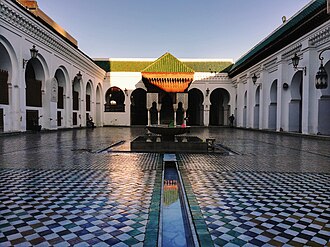
One of the defining highlights of a full-day itinerary is Al Quaraouiyine, often described as one of the oldest universities in the world. Founded in the 9th century by Fatima al-Fihri, the complex represents Morocco’s historical relationship with learning, religion, and urban development. Even when access is limited, viewing the complex and understanding its role gives you deeper insight into why Fes became such an influential city.
Moreover, Karaouine is a powerful reminder that Moroccan heritage is not only visual; it is intellectual and spiritual too. A good guide will explain what you are seeing, how the institution evolved, and why it remains culturally significant today. As a result, the stop becomes more than a “name on a list”—it becomes one of the moments that gives your Fes day real meaning.
Moulay Idriss II: visiting the founder’s tomb area respectfully
Many guided tours include the tomb area of Moulay Idriss II, who is closely connected to the historical identity of Fes. This stop is often approached with respect and cultural sensitivity, because it is a meaningful religious and historical place for many Moroccans. Therefore, your guide will typically explain etiquette, photography rules, and appropriate behavior so you can appreciate the site respectfully.
In addition, this stop adds storytelling depth to the day. You are not only seeing buildings; you are connecting to the origins of the city and understanding how religious, political, and cultural history shaped Fes. Consequently, the experience becomes more coherent—each monument builds on the previous one, turning the tour into a narrative rather than scattered stops.
Fes tanneries guide: how to enjoy the experience (and avoid mistakes)
No full day in Fes feels complete without at least understanding the tannery tradition, and this is where a Fes tanneries guide makes a major difference. Tanneries can be intense because of smells and crowds, yet they also represent a powerful craft heritage that is still active. With a guide, you can approach the viewpoint at the right time, learn what the processes mean, and avoid being pushed into uncomfortable shopping pressure.
Additionally, a guide helps you interpret what you are seeing: how leather is treated, how colors are created, and why this craft remains linked to Fes identity. Instead of a quick photo stop, the tannery visit becomes a real learning moment. As a result, many travelers remember this section as one of the most “real” parts of their Fes experience.
Lunch in the medina: turning a break into a cultural experience
Midday is the perfect moment to slow down and reset energy levels. Many full-day programs include lunch at a well-known traditional restaurant inside the medina, which is practical and immersive at the same time. Because you are already in the historic core, you avoid unnecessary transfers and keep more time for the afternoon highlights.
Moreover, lunch is not only about food—it is a cultural moment. Sitting down for a traditional meal, tasting local flavors, and observing medina rhythm from a calm space adds depth to the day. Consequently, this break helps your afternoon feel fresh instead of rushed, which is especially important if you plan to travel onward afterward.
Afternoon highlights: Nejjarine Fountain and the craftsmanship story
After lunch, many itineraries continue toward the Nejjarine Fountain area, one of the most photogenic and historically meaningful corners in Fes. The fountain’s design and surrounding architecture reflect the city’s refined craftsmanship and its relationship with woodwork, trade, and urban beauty. Because the afternoon light can be softer, it is often an excellent time for photos and calmer walking.
In addition, this stop helps connect the medina’s commercial side with its artistic side. You begin to see how craft, architecture, and social life are linked: fountains, courtyards, and artisan streets create a coherent visual identity. Therefore, the Nejjarine area is not only a “nice picture”—it is another chapter of the story your guide is building throughout the day.
Batha Museum and gardens: a quieter cultural chapter
Batha Museum is often included as an afternoon stop because it offers a calmer environment and a different way to engage with Moroccan art. After busy markets and walking alleys, museum spaces can feel refreshing and allow you to connect the objects you saw in shops with their deeper historical and artistic context. As a result, you finish the day with understanding—not only impressions.
Furthermore, museums and gardens add balance to a full-day itinerary. They reduce sensory overload and create time for reflection and photography in a calmer setting. Therefore, Batha is especially useful for travelers who want a cultural day that feels complete and not only “busy.” In many tours, this stop also creates a natural transition toward the final panoramic viewpoint.
Panoramic viewpoint: the best photos and the best “end-of-day” moment
Before returning to your hotel, a guide will often invite you to stop at a panoramic viewpoint over Fes. This moment is powerful because it lets you see the medina as a whole after walking inside it—minarets, rooftops, and the city’s layered layout become visible in one wide view. Because you now understand the medina’s complexity, the panorama feels meaningful rather than abstract.
Additionally, this viewpoint is a practical end point for photos and closure. It gives you one final highlight without more walking, which is ideal after a full day on foot. As a result, the day ends with a sense of completion: you experienced the medina from within, then stepped back to appreciate its scale from above.

How this full-day Fes visit fits into Morocco desert tours from Fes
Many travelers visit Fes as part of a wider itinerary that includes the Sahara. A full day in the medina is an ideal cultural foundation before you head south toward dunes and desert camps, because it adds history and depth to your trip narrative. That is why Morocco desert tours from Fes often begin after at least one guided Fes day—so you do not “skip” the culture that makes the city special.
In addition, Fes works well as a starting point for desert travel because the route south shows Morocco’s changing landscapes. You move from historical city life into mountains, valleys, and finally desert horizons. Consequently, combining a full Fes day with a desert route creates one of the best “culture + nature” combinations in the country—especially for travelers who want a complete Morocco experience, not only one theme.
Connecting Fes with Casablanca, Tangier, Marrakech, and longer Morocco routes
Fes is also an excellent “connector city” in multi-city itineraries. Travelers often arrive from the north via Desert Tours from Tangier routes that include Chefchaouen and then continue toward Fes before the Sahara. Others begin with Casablanca desert tours or Casablanca city time, then travel to Fes for medina culture, and later head south. Therefore, Fes plays a central role in building coherent routes that avoid unnecessary backtracking.
Moreover, if your trip includes Marrakech, a full-day in Fes creates a strong contrast: Fes feels ancient and medina-focused, while Marrakech feels energetic and open with gardens and big plazas. This contrast is exactly why many travelers build longer journeys such as a 3 weeks in Morocco itinerary or other extended loops. As a result, one day in Fes is rarely “enough,” but it is often the perfect cultural anchor for a longer plan.
Small group vs private: choosing the right tour style for Fes
Tour style shapes the day more than most travelers expect. Small Group Morocco Tours can be excellent for travelers who enjoy a social atmosphere and predictable planning, especially if the group size stays small and the guide is high quality. When done well, small groups can still feel personal, and they often include enough free time to browse markets or take photos without pressure.
On the other hand, private guiding offers more flexibility and comfort. You can move slower, skip stops you do not care about, and spend longer where your interests are strongest—architecture, crafts, or food. Consequently, travelers comparing best Morocco tours often choose private or semi-private options for Fes, because the medina experience improves dramatically when pacing matches your personal rhythm.
Tailor-made and custom planning: building your day into a bigger Morocco journey
Many travelers now prefer tailor made Morocco tours because Morocco offers so many route options and comfort levels. A full-day in Fes can be placed at the beginning of a trip, in the middle before the desert, or even near the end as a cultural finale. Because every traveler’s priorities are different, custom planning is often the best way to avoid rushing and to protect the quality of each city experience.
Additionally, full customization helps families and multi-generation groups travel comfortably. You can plan shorter walking blocks, more café breaks, or specific interests like food experiences and craft visits. This approach fits naturally into Morocco Family Tours and longer routes that mix cities, desert, and coast. As a result, your Fes day becomes not a generic template, but a meaningful piece of a larger Morocco story.
FAQ: common questions about a full-day Fes guided tour
Travelers often ask whether a full day is too long for the medina, whether they need a guide, and what they should wear. A full day is usually ideal because it allows both highlights and slower cultural moments without rushing. A guide is strongly recommended for first-time visitors because the medina’s layout is complex and because context makes the sites far more meaningful.
Visitors also ask about comfort and safety. Comfortable shoes are essential, and respectful clothing is recommended, especially near religious and traditional spaces. Additionally, carry water and pace yourself with breaks. Consequently, with the right preparation and the right guide, a full day in Fes becomes one of the most memorable cultural days in Morocco.
Conclusion: why your Morocco trip needs a full-day Fes medina walking tour
If you want to understand Morocco beyond surface-level sightseeing, a full day in Fes is one of the strongest cultural experiences you can choose. From imperial identity and market life to the Karaouine heritage, artisan traditions, and panoramic viewpoints, the city delivers depth in every direction. Because the medina is complex and alive, guided exploration transforms it from “a maze” into a meaningful narrative.
Finally, Fes fits naturally into bigger routes—north-to-south journeys, desert itineraries, or longer cultural loops. Whether you continue with Morocco desert tours from Fes afterward or connect to other cities, the understanding you gain in Fes makes the rest of Morocco feel richer. As a result, this day is not just “a tour”—it becomes the cultural foundation of your entire Morocco journey.